Industry Insights

Our constant engagement with an evolving and digitally connected world

Industry insights


by Pete Nisbet 7 November 2024
edenseven Designs Energy Supply Strategy for H2 Green By conducting an energy sourcing review and engaging with suppliers H2 Green are a large-scale hydrogen storage business with a focus onsite close to towns and cities across the UK. H2 Green’s ambition is to build hydrogen hubs that deliver large amounts of hydrogen, providing security of supply for multiple users across whole regions. H2 Green engaged edenseven, one of the Cambridge Management Consulting group of companies, to build an electricity supply strategy to meet their growth aspirations and environmental requirements. Project Overview To provide a clear outline of the contracting structures within the UK electricity market which would support the green credentials of the business. Structures needed to range from REGO back supply contracts to more complex long-term renewables agreements. All contracting requirements needed to meet the ‘Renewables Transport Fuel Obligations’ and ‘Low Carbon Hydrogen Standard’. Investigate the commercial opportunities short short-term flexibility of assets and liaise with the supply commodity on product development. Support in consultations to government departments relating to the proposed price support mechanism. Skills & Knowledge An energy expert with a detailed knowledge of the UK energy market, with a specific understanding of the evolving policy landscape and how green hydrogen fits into the government’s forward plans. An insight into global commodity markets and the various contracting structures currently in place across the supply community. A clear understanding of how assets can be utilised in the short-term trading markets and the value of ‘optionality’. An individual who holds key relationships across the supply community to enable product development and the ability to influence existing standardised offerings. Outcome & Results Market Analysis : The delivery of a clear and concise view of all the contracting structures currently being provided with the UK electricity market; this included both physical and financial products. Engagement with Government Bodies : A well-considered submission to the relevant government bodies in response to a published consultation. This outlined the appropriate pricing and support structure needed to accelerate the Green Hydrogen Industry. Supplier and Investor Relationships : The creation of a strong link to key suppliers and investors within the energy market. Promoting the development of Green Hydrogen and the benefits it can bring to global decarbonisation.
A satellite over planet Earth with the sun glowing in the top left
by Steve Tunnicliffe 15 October 2024
The Satellite Industry is in a Period of Momentous Transformation The satellite industry is going through a period of momentous transformation with the emergence of new entrants and new technologies in every segment of the value chain. For decades satellite communications have been dominated by a handful of GEO satellite manufacturers, satellite operators and ground segment manufacturers with almost a cottage-industry-like network of service providers and value-added manufacturers (BUCs, LNBs and antennas). This has been a linear and predictable business model with entirely proprietary technologies. We now see the emergence of new Non-Geostationary Orbit (NGSO), or multi orbit players in LEO, MEO and HEO building completely vertically integrated systems. This shift has significantly driven down capacity pricing: the price of satellite bandwidth for data services has dropped 77% over five years according to analysts Novaspace, formerly known as Euroconsult. Starlink, as the first to market, is making waves by disrupting market sectors historically monopolised by the established GEO players such as maritime, aero and enterprise connectivity. Two years ago, the industry would have dismissed Starlink's impact on maritime or aero connectivity segments. The sentiment was that Starlink has ‘no CIR’ (Committed Information Rate) and therefore would not be considered ‘reliable’ for mobile or critical communications. This notion has since been overturned and the naysayers have paid a price with a significant impact to revenues in maritime—the cruise industry in particular—with Starlink now making inroads into aviation and previously inviolable segments like defence. Starlink has also revolutionised satellite manufacturing, leveraging new technologies such as 3D printing to mass-produce satellites at a phenomenal rate, reducing costs to between $250,000 and $500,000 per satellite. The race is on, with Elon Musk’s Starlink trying to acquire as many subscribers as possible before the challengers like Amazon's Kuiper and Telesat's Lightspeed emerge. Forrester's Digital has predicted that SpaceX’s Starlink broadband-by-satellite system is likely to end 2025 with around 8 million customers (it ended 2024 with approximately 5 million), a remarkable growth rate when you consider that each of the leading GEO satellite operators typically have around 25,000 enterprise VSAT terminals activated. We also see the emergence of Small Sat and MicroGEO manufacturers disrupting traditional commercial models with innovations like satellite-as-a-service. This technology provides additional or targeted capacity for defence and government in hotspot areas. Twenty-five years ago, building and launching a satellite would have cost at least two billion USD. Now we see them being built and launched at a fraction of that cost (circa $60 million), reducing the price per gigabit equal to or below fibre. Starlink has also been fundamental to reducing launch costs. In 1981, launch costs were $147k per kilogram of payload. Starlink’s current generation of rockets have brought this down to $2300 and with the introduction of their new Starship rocket, Elon Musk is talking about a price as low as $100 per kilogram. This scale of reduction in launch costs is driving the democratisation of space by allowing new use cases for space to emerge. The satellite industry is also seeing unprecedented consolidation, coopetition and collaboration, creating a range of new offers to consumers, enterprise and governments. Significant transactions include: In April 2024, SES announced its intention to acquire rival Intelsat. If and when this completes, it will be a significant transaction In May 2023, Viasat completed its acquisition of Inmarsat In October 2023, Eutelsat and OneWeb completed their merger transaction In March 2024, prior to the SES announcement, Intelsat extended its partnership with competitor Eutelsat-OneWeb for LEO services.
by Duncan Clubb 6 September 2024
Artificial Intelligence (AI) is the hottest topic in technology for many reasons, good and bad, but it’s happening and it’s here to stay, so how do we build the infrastructure necessary to support it? To start with, we should recognise that there are many forms of AI. The one that has created the most buzz is generative AI, as seen in ChatGPT, Meta's LLaMA, Claude, Google’s Gemini, and others. Generative AI relies on LLMs (Large Language Models) which have to be trained using vast amounts of data. These LLMs sit in data centres around the world, interconnected by vast fibre networks. The data centre industry has not stopped talking about AI for at least 18 months, as it gears up for an ‘explosion’ in demand for new capacity. Some of the most respected voices in technology have predicted immense amounts of growth in data centre requirements, with predictions of triple the current capacity within 10 years being at the conservative end. That’s three times the current global data centre market, which has taken 30 years or more to get to where it is today. And, when we say growth, we’re talking about power. AI systems will require three times more electricity than data centres currently consume. Depending on who you ask, that’s about 2-4% of today’s global electricity production. And we’re talking about tripling that, or more. Data Centres So, what is ‘AI-ready infrastructure’ and how are we going to build it? The two key elements are data centres (to house the AI systems) and networks (to connect them with the rest of the world). LLM training typically uses servers with GPUs (the chip of choice for AI) and, for various technical reasons, these work best when in close physical proximity to each other – in other words, GPUs work best in large numbers in large data centres. Not just that, but the new generations of GPUs work best in dense data centres, meaning that each rack or cabinet of AI kit needs a lot of power. Most data centres are designed to accommodate older kit that is not so power hungry. The average consumption globally is about 8kW per rack, although many still operate at about 2kW per rack. The latest nVidia (the leading GPU manufacturer) array needs a colossal 120kW per rack. The infrastructure inside a data centre designed for these beasts is complex: the cooling systems (GPUs run very hot) and electrical distribution systems are much harder to design and set up, and are also expensive. So, data centres for AI training systems are mostly going to be new, as adapting older facilities is a non-starter. So, where do you put them? Finding land next to the vast amounts of electricity required is increasingly difficult in many European countries, especially in the UK. Most of the utility grids in Europe are severely lacking in spare capacity, and building new grid connections and electricity generation is a slow and expensive process. The answer might be to locate these new AI data centres near new renewable energy generation sites, but those are few and far between, so land with access to power now carries a hefty premium. Small nuclear reactors could also be an answer but might take a few years to materialise – we know how to build them (witness the nuclear submarine industry) but getting planning permission to put them on land is another matter. All in all, the data centre industry seems to be at least a few years away from being able to provide the massive upgrade in capacity that is expected. Even solving the land/power problem leaves the issue of actually building a new scale of data centre, 10 or 20 times bigger than what most would consider to be a gigantic site today. It can be done, we can solve the engineering challenges, but these are huge construction projects. Networks What about the networks? Actually, although very little real research has been done on the impact of large-scale AI rollouts on existing networks, we might be in a better position. The fibre networks in the UK and many European countries have benefited from significant investment over the last few years, so coverage is a lot better than it used to be. That does not mean that fast and large fibre routes, which will be a necessity for most AI systems, are all there, but it will be easier to build out new capacity than it will be to find power. Still, what we really need is some serious research into the amount of data that will need to be moved about and how that maps with existing network infrastructure. All in all, we have more questions than answers. Some people in the infrastructure industry are sceptical that things will ever get to the scale that some are predicting, but most of us do expect it to happen – it’s just a matter of time, and the race has already begun. Cambridge Management Consulting Duncan Clubb is a Senior Partner at Cambridge Management Consulting, specialising in data centre and edge compute strategy. Duncan has extensive experience as an IT consultant and practitioner and has worked with many leading organisations in the financial, oil and gas, retail, and healthcare sectors. He is widely regarded as a leading expert and is a regular speaker at industry events. If you or your organisation require support preparing your Digital Infrastructure for the emerging AI-industry, you can read about our array of Data Centre services, and get in touch with Duncan Clubb, through our designated Telecoms, Media, and Technology service page.
by Rachi Weerasinghe 19 August 2024
The EU AI Act In March of this year, the European Union published their Artificial Intelligence Act, establishing a common regulatory and legal framework for AI across the EU. Two significant features of this act include the definition and prohibition of AI practices which pose an ‘unacceptable risk’; as well as the requirement for developers and ‘implementers’ to register high-risk AI models and maintain technical documentation of the model and training results. The AI Act is the first comprehensive AI legal framework in the world. It will help to shape the digital future of the EU and guarantee the safety and fundamental rights of people and businesses. Who does it Apply to? The Act applies to any marketing or use of AI within the EU, regardless of whether those providers or developers are established there or in another country. While this effectively makes the act global in scope, this will depend heavily on how effectively authorities can prosecute outside of the EU. A Risk-Based Approach The EU’s AI Act adopts a risk-based approach which categorises AI systems into different risk levels (Unacceptable, High, Limited, and Minimal Risk), and imposes corresponding regulatory requirements.
Carer pushing a service user in a wheelchair through a rural setting
by David Lewis 30 July 2024
Unpaid carers provide essential support yet face poverty and isolation. Learn about Carers Network’s work in London, trustee Nadia’s story, and how Cambridge MC supports this vital charity helping carers gain recognition, resources, and dignity.
by Pete Nisbet 23 July 2024
edenseven Helps ISS to Decarbonise their Operations By conducting a review of their market and target audience to align their organisation with their sustainability goals. ISS is a leading workplace experience and facility management (FM) company which provides placemaking solutions that contribute to better business performance and make working life easier, more productive, and more enjoyable. With a significant presence in the build environment, ISS has a clear focus on delivering sustainable services to their customer base, helping them to achieve their net zero ambitions. edenseven , one of the Cambridge Management Consulting group of companies, were commissioned to review ISS’ current sustainability market offering, and, through an engagement programme, make sure that it was aligned to the requirements of their customers’ long-term sustainability ambitions. Project Overview To review the current market relating to sustainability services within the sector and outline the different types of structures and products being offered. Assess the current product and service positioning of ISS and review how they are being presented and articulated to the internal delivery teams and customer base. Create a clear and concise value proposition which outlines ISS’ breadth of services, and which can be communicated to customers by a broad cross section of the ISS team. Through a customer engagement programme, test the value proposition with a set of key accounts and record areas where refinement would be needed to align it to their requirements. Present findings to the ISS UK board and provide clear feedback and next steps. Skills & Knowledge Data Analysis: A broad knowledge of both the FM and sustainability sectors, and an ability to articulate findings from market research and stakeholder/customer interactions in an effective manner. Report Generation: Create documentation and reports which deliver complex requests and findings in a concise and clear manner to senior stakeholders and customers. Stakeholder and Customer Engagement: Build a continuous feedback loop to senior stakeholders within ISS and across key customer accounts. edenseven captured and reviewed customer needs and service requirements to produce effective and timely decision making. Outcome & Results Market Awareness: A clear understanding of market trends and contractive characteristics relating to sustainability services in the FM sector. Organisational Clarity: An outline of current services and how they are delivered through the sales process. Value Proposition: A clear and relatable value proposition which captures all services in a format which can be delivered by a broad cross-section of the ISS workforce. Forward Planning: A board-level presentation and report outlining key findings and next steps to deliver existing and new services which are focussed on meeting key customer requirements.
A stately council building in England with a neon tint
by Craig Cheney 11 July 2024
It is no secret that Local Authorities throughout the UK have found themselves in a period of economic turmoil; struggling with a lack of funding and how to distribute it - or, often, deciding to withhold it. Since Northamptonshire County Council issued section 114 (the local council equivalent to declaring bankruptcy ) in 2018 – the first to be issued in nearly two decades – an average of two regional authorities have issued their own section 114 notice each year since. Three local authorities issued section 114 notices last year alone, including the largest in Europe, Birmingham City Council . Referring to this escalation, Jonathon Carr-West , Chief Executive of the Local Government Information Unit (LGIU), said: “This year’s State of Local Government Finance report reveals the desperate, ruinous financial situation councils find themselves in. “With over half of councils warning us they are at risk of bankruptcy within the next Parliament, it is no longer possible to blame individual governance issues.” What are the Causes? Funding The key driver is lack of central government funding. Council’s cannot borrow to run services and so rely on income and reserves in order to pay for day-to-day services. Central government funding cuts have seen councils lose nearly 50% of their government funding since 2010. This has been partially offset by council tax rises, but still means local authorities have lost nearly 20% of their funding in real terms since 2010, with those representing the most deprived areas reaching nearly 30% . Adult Social Care During this time spending on Adult Social Care (support provided to adults, including both older people and people of working age, with physical disabilities, learning disabilities, or physical or mental illnesses) has increased dramatically. An ageing population is driving increased demand while the cost of care home placements has increased by 35% . Child Social Care Spending on Children’s Social Care has increased significantly, particularly since COVID-19 with the number of children in secure units and children’s homes and the number with Education, Health and Care plans both increasing by over 30% between early 2020 and early 2023. The cost per placement has increased by almost 20% over that time period. Both Adult and Children Social Care costs have increased far above inflation over this time, coming on the back of a huge reduction in core spending power. Temporary Accommodation Finally, the cost of providing Temporary Accommodation has risen sharply over the past few years. An LGA report revealed that local councils were spending at least £1.74bn to provide temporary accommodation, with a severe shortage in social housing resulting in a portion of this going to private alternatives including hotels and B&Bs. These figures represented the current situation as of March 2023, when 104,000 households were living in temporary accommodation, an 89% increase over the past decade. Only 8 months later at the close of 2023, this had risen to 112,660 households in temporary accommodation—with the funding required to balance this increasing exponentially, pushed higher by a cost of living crisis and inflation. What are the Consequences? The most immediate and simple way look at this is that while bills have increased significantly for the average council tax-payer, services have been significantly scaled back. Cuts to park budgets, economic development, culture services, and the reduction in spending on Public Health, education, housing services, children's centres and everything else that local government is responsible for have left many cities, towns and villages looking neglected and often struggling with anti-social behaviour and boarded-up high streets. Behind the scenes, many of the essential back office functions have been stripped to the bone in order to protect frontline services: call centres are understaffed; planning services unable to cope with demand; not enough project managers, accountants or procurement staff to deliver on council ambitions or the transformation projects to reduce costs on essential services; not enough HR staff to support those on the frontline and not enough administrative staff to support the social workers, education & skills teams, the transport teams and the rest of local government trying to prop up essential local services. Local government is the government that touches all of us every day, even if we don’t always realise this. The new Labour government will need to focus on this issue for the benefit of every individual, community and region. How Cambridge MC can Help Local Councils If you are currently working in local government and are feeling the impacts of the economic crisis as outlined here, the Public Sector and Education team at Cambridge Management Consulting can work with you and your council to alleviate some of this pressure in both the short- and long-term. Our skilled procurement and contract management team can help you reduce costs; our programme and project management function offers fractional or interim leadership and full lifecycle support for challenging transformation projects; and our process and change management teams can help with process re-design and automation. We can also support your organisation with a range of cyber security issues you may be facing; potential or live, and our Digital and Innovation team can help solve your problems in new ways, using the latest technology to improve outcomes for your residents as well as reducing costs. Led by Craig Cheney, previous Deputy Mayor of Bristol City Council, our service combines an in-depth knowledge and awareness of the Public Sector, its operations, and challenges, with a business approach to help you identify and evaluate obstacles and opportunities for movement within your budget. Learn more about Craig and our Public Sector & Education service, and get in touch with our professionals at https://www.cambridgemc.com/public-sector-and-education , or use the form below.
Picture of African students in a classroom
by Elia Tsouros 8 July 2024
Since the 1960s, significant strides have been made to provide and increase access to quality education for children and young people in Africa. The educational environment has not remained stagnant, and the continent is all the better for it. However, this unfortunately does not paint the whole picture, and there is a poignant reality that lies just behind the statistics. In short, merely having access does not guarantee an improvement to the actual quality of this education; as rightly noted by Faturoti, “Although all African countries have legal provisions recognising the right to education, there is no corresponding law on access to the Internet.” Yet, Africa’s unique combination of challenges has left more than just gaps in knowledge: 2019 saw 17% of African children not attending primary school, and 53% of teenagers not attending upper secondary school . The harsh blow dealt by COVID-19 has only deepened the educational crisis globally. Yet, despite these challenges, there is a resilient spirit that refuses to be extinguished. The pandemic has underscored a powerful lesson: technology, when harnessed with the right connectivity, can be a transformative force, offering a ray of hope in the quest to overcome educational barriers. In this article, we will explore how we can take the barriers blocking this intelligent future and support the growth of a digitally connected classroom, ensuring that no one is left behind in the continent’s transformation. The ways in which learning is conducted has never been more important: to learn is to grow and the progress which begins in the classroom will soon be reflected across the continent. From Challenges to Change: Barriers to a Connected Classroom In the expansive landscape of Africa, a sobering reality appears –only 39.7% of the population is woven into the digital fabric, standing in stark contrast to the global average of 66.3% as reported by the International Telecommunication Union (ITU). This digital divide is not just a technological hurdle but a societal challenge, one that deepens when faced with the simultaneous necessity to invest not only in advanced technology but also in financial literacy. As we grapple with the intricacies of digital inclusion, the first bridge we must construct is one that spans connectivity disparities: the use of online educational platforms can ensure that students not only have access to educational material relevant to their studies, but also that this material is the latest available. Electrical reliability stands as a foundational must-have for the successful implementation of digital learning initiatives. Investment in expanding telecommunications infrastructure , such as laying fibre-optic cables and deploying wireless networks, is crucial to bridge the digital divide and ensure widespread connectivity. Furthermore, enhancements in power generation including the use of traditional and renewable energy sources and distribution systems are essential to guarantee uninterrupted access to online educational resources. Uninterrupted power supply ensures that students can access online lectures, assignments, and collaborative activities seamlessly, fostering a conducive learning environment. Put simply, enhanced learning makes for more engaged and enlightened students. Furthermore, technical support is indispensable for ensuring the effective implementation and maintenance of digital learning infrastructure. However, limited access to skilled technical personnel, inadequate training, and insufficient resources present significant challenges. Training and capacity-building programs must be enhanced to equip individuals with the necessary skills to support complex ICT infrastructure effectively. There are many projects already underway which promise to forge this change and training. Investing in training programs, certification courses, and apprenticeship initiatives promise to cultivate a skilled workforce capable of delivering and, importantly, sustaining these changes. Addressing these interconnected challenges requires a holistic approach, encompassing political commitment, infrastructure investment, educational reform, and skills development initiatives. Without sustained political commitment and investment, efforts to expand internet access and improve electricity reliability risk being compromised, perpetuating the digital divide. The strategy was endorsed by the Thirty–Sixth Ordinary Session of the African Union Executive Council held in February 2020 , who recognised this: only through collaborative efforts and sustained investment can Africa bridge the digital divide and unlock the transformative potential of digital learning for all its citizens. Looking Forward and Building Change Yet, by overcoming these challenges, the future is bright and worth investing in. We must recognise what is at the core: education is a basic right to all communities, globally. Results are already beginning to bear fruit: UNESCO’s forum on quality public digital learning reveal how bright the prospects could be. Van Manen et al. (2021) emphasise the remarkable impact of digital learning on advancing SDGs , highlighting how it enables countries to address key challenges such as poverty, inequality, and access to quality education without the need for extensive physical infrastructure investments. By leveraging digital technologies, governments can reach underserved populations, bridge educational divides, and empower individuals with the knowledge and skills needed to uplift themselves and their communities. The continent’s digital uptake has also been staggering and speaks to a unique adaptability and adoptability when faced with change. In a 2020 study conducted by GSMA, it was revealed that over 1.4 billion subscribers on the continent utilise their mobile phones as powerful tools for educational enrichment , underscoring the widespread recognition of digital learning's value in shaping the future of African youth. From accessing online courses and educational apps to engaging in virtual classrooms and interactive learning platforms, mobile devices have become indispensable companions on the journey towards academic achievement. This should not be ignored: beyond mere convenience, this shift represents a democratisation of learning, where access to knowledge is no longer limited by physical proximity or socioeconomic status. Instead, digital learning empowers individuals to take ownership of their educational journey, enabling them to learn anytime, anywhere, and at their own pace. Yet, the role of ICT initiatives in classrooms can go even further, providing a visionary tool for tackling existing education inequalities. Behind stark statistics lie the stories of over 129 million girls’ dreams , which are deferred by the harsh realities of poverty, gender-based violence, and early marriage. Each day, countless young minds are forced to miss out on the transformative power of education: girls miss up to 50 days of schooling each year due to the lack of sanitary wear according to Life Healthcare . ICT-equipped classrooms do not promise to solve these issues but bridge the gap: if remote learning becomes a possibility, so does change. Key stakeholders are also ready, able, and actively engaging with the modern education landscape to make the path to learning easier. We’ve seen initiatives take root here in the UK, with Mobile network operators (MNO’s) offering zero rated connectivity packages for education platforms such as BBC Bitesize . Yet, these changes can be seen across the globe and felt deeply: in Kenya, Nigeria and South Africa, initiatives have revealed whole new possibilities for access to information . With software providers also offering free subscription platforms with available content and data, it is clear that the future is brighter than ever. Amidst these challenges, digital learning platforms emerge as powerful allies, tearing down barriers and extending the hand of opportunity to every corner of the globe. Through the magic of digital tools, students are no longer confined by the limitations of geography or circumstance. Instead, they can connect with specialists and mentors from across the world, unlocking new realms of knowledge and inspiration. Conclusion Connected classrooms provide a bridge to change, change which is exciting and necessary. Access to a learning which is digitally engaged promises to enrich education opportunities and better the outcomes for future students. Yet, beyond mere access, digital literacy becomes a lifeline, empowering individuals to navigate the complexities of the modern world with confidence and resilience. In the midst of a rapidly evolving digital landscape, these skills serve as a passport to a future where no dream is too big and no obstacle too daunting. How We Can Help At Cambridge Management Consulting, we stand out from the crowd, particularly in the dynamic and intricate landscape of Africa. Our commitment goes beyond quick fixes; it's about crafting tangible and enduring impacts that resonate with the unique challenges and opportunities present in this diverse continent. Just as digital education offers a cost-effective avenue for countries to enhance their performance on Sustainable Development Goals (SDGs) without the need for expansive physical infrastructure, our consulting philosophy embraces innovative solutions that recognise and leverage Africa's unique dynamics. At the heart of our approach lies our handpicked team of experts, deeply passionate and intimately connected to the pulse of Africa. With a nuanced understanding of the challenges and opportunities this diverse continent presents, we strive to positively impact businesses in the most authentic and sensitive manner, echoing this article's recognition of the transformative potential of digital education in Africa.
Row of old analogue telephones
by Clive Quantrill 24 June 2024
Authors
A row of data centre stacks outside in a field of grasses and wildflowers
by Stuart Curzon 20 June 2024
Press Release: 19/06/2024, London – Deep Green, an innovative and sustainability-forward data centre operator, is delighted to announce that it has engaged Cambridge Management Consulting (Cambridge MC), a leader in management consulting, in order to expand its market presence and widen Cambridge MC’s portfolio of digital infrastructure solutions. Deep Green is a first-in-industry decarbonised data centre operator who has developed an innovative system for recapturing the heat produced by data centres in order to channel it into positive, environmental, and community-focused purposes. Examples of such initiatives include swimming pools, district heating systems, pharmaceuticals, and agricultural entities, for which Deep Green will provide heat for free in exchange for the opportunity to host their technology. Through this engagement, Deep Green will work with Cambridge MC on its go-to-market strategy, and have access to Cambridge MC’s network of clients and customers, for whom Cambridge MC can also expand their digital infrastructure and sustainability support through the use of Deep Green’s unique service. Mark Bjornsgaard, Founder and CEO of Deep Green, said: “As we continue to drive demand for our unique data centre solution, it is critical to forge the right partnerships, and in this case initiated by an organisation that people trust. Cambridge MC understands what we are doing as a business, and why it is critically important; they share our passion and motivation for sustainable change in infrastructure. I look forward to a fruitful partnership, and one that drives our growth.” Stuart Curzon, Chief Commercial Officer of Cambridge MC, said: “Deep Green are an incredibly innovative organisation whose principles of sustainability and community-focus speak directly to Cambridge MC’s own values. We are very excited to be able to bring their brilliant solution to more customers and clients.” Tim Passingham, Founder and Chairman of Cambridge MC, added: “Our purpose is to help our clients have a better impact on the world, and Cambridge Management Consulting is continually looking for new ways to make digital infrastructure more sustainable. Deep Green’s approach to digital infrastructure is truly innovative, and I am delighted that they chose Cambridge MC, and for our teams to be working together.”
Aerial shot of city with a triangle shaped roof terrace in the centre
by John Madelin 17 June 2024
What are NIS2 & DORA? Standing for the Network and Information Security Directive, the NIS Directive is an EU Regulation which details a blanket level of cyber security measures required of all Member States and organisations within them, as well as those with or seeking to establish a footprint in Europe. In 2022, the Official Journal of the European Union published their updates to this Directive in NIS2 , which made their regulations more stringent while broadening the scope of who it applies to. One of these amendments differentiated between entities deemed ‘important’ and ‘essential’, whereby the latter, which includes Banking and Finance, will be subject to closer scrutiny and greater penalties regarding their compliance with NIS2 – or lack thereof . This level of regulated scrutiny will also be heightened by a further EU directive, the Digital Operations Resilience Act ( DORA ). Similar to NIS2, DORA is described as establishing a ‘ comprehensive framework for harmonising digital resilience processes and standards ’. However, where NIS2 applies to all business entities within the EU, DORA is specifically designed to ‘strengthen the resilience of digital operations in the financial sector ’. Thus, though accounting for similar processes and practices, as we shall outline, the emergence of both NIS2 and DORA represent at least two sets of cyber criteria which financial entities must comply with, not only to avoid legal penalty, but to remain robust in an increasingly dangerous digital environment. NIS2 and DORA are scheduled to become national law on the 17 th October 2024 and 17 th January 2025 respectively, and it is important to understand both in order to ensure that your business is compliant with their requirements. NIS2 Requirements Chapter 4 of NIS2 requires that all Member States of the EU ensure that all of their essential and important entities ‘take appropriate and proportionate technical, operational, and organisational measures to manage the risks posed to the security of network and information systems’ . By ‘appropriate and proportionate’, NIS2 directs all such entities to adopt an ‘all-hazards approach’, by which they refer to a baseline set of requirements including: a. Internal Security Policies: Develop and enforce good essential policies that ensure robust internal security practices. b. Incident Handling: Establish tested protocols to effectively respond to and manage security incidents. c. Backup Management & Disaster Recovery: Ensure reliable backup solutions and disaster recovery plans to safeguard data integrity, also ensuring continuity. d. Supply Chain Security: Maintain mutual responsibilities with partners through clear connections and dependencies to avoid the cascade effect of major incidents. e. Information Security Maintenance: Ensure the security of your network, including vulnerability handling and disclosure. f. Ongoing Assessment: Continuously update and monitor information security measures to protect against the ever-changing street smarts of evolving threat actors. g. Cyber Security Hygiene & Training: Regularly assess and adapt security measures to current threat landscapes, which are often basic and repeated. h. Cryptography & Encryption: Provide continuous cyber security training promoting best practices among employees, and ensuring Quantum-ready cryptography, a subject of other evolving regulations. i. Human Resources Security: Implement thorough background checks and enforce security protocols for all personnel. j. Multi-Factor Authentication: Enhance access control through the use of multi-factor authentication, which is always a feature of successful cyber incidents. DORA Requirements DORA is considered a Lex Specialis for financial sector entities, meaning that, where it possesses overlapping or shared regulations and principles with NIS2, DORA takes precedence. Thus, though it is still important to remain aware and informed regarding NIS2 and its requirements, it is more important to be equipped with an acute understanding of DORA. DORA requires that all financial entities be equipped with an ‘ internal governance and control framework ’ designed to strengthen their cyber defences, particularly in regards to the transfer of data, risk of corruption, confidentiality and loss of data, and protection from human error. In order to ensure this, DORA insists upon the implementation of the following processes: a. An information security policy with clearly defined rules to protect the availability, authenticity, integrity, and confidentiality of data. b. A sound infrastructure management structure which makes use of appropriate techniques and mechanisms, such as those which isolate affected assets in the event of a cyber attack. c. Policies which limit the physical access to information assets and ICT assets to what is legitimate and approved. d. Protocols for strong authentication mechanisms based on relevant standards and systems, including the use of encryption. e. Controls for ICT change management in order to ensure that any changes are recorded, tested, assessed, approved, and verified. f. Appropriate policies for patches and updates . Implications for the Finance Sector Both NIS2 and DORA may appear to establish relatively basic levels of cyber security awareness and defence, however it is important that they are properly implemented and strengthened within your operations. This is partly due to the financial and reputational losses that can and will impact your organisation in the event of a cyber security breach. In considering financial entities to be essential, NIS2 makes them liable to a fine of up to €10m or 2% of their annual turnover, whichever is higher. Similarly, DORA penalises any instance of non-compliance with a daily fine of up to 1% of the average daily worldwide turnover of the financial entity until compliance is reimposed. Furthermore, the reporting obligations of both Acts pose significant and specific considerations to financial entities, based on how and when an organisation should bring awareness to a potential or recent cyber security breach. DORA’s Article 10: Detection imposes that financial entities shall ‘have in place mechanisms to promptly detect anomalous activities’, and expands the reporting process in Article 17: ICT-related incident management process to ensure that ‘major’ cyber security incidents are reported to the appropriate management bodies in order to enact mitigation and prevention procedures. Similarly, NIS2’s Article 23: Reporting Obligations requires that all essential and important entities promptly identify and report any ‘significant’ cyber security breach or incident to their representative computer security incident response teams (CSIRTs). There are two main indicators which make an incident ‘significant’ under NIS2: one is that it has affected or caused damage to other entities or persons; the second is that ‘it has caused or is capable of causing severe […] financial loss for the entity concerned’. This is particularly emphatic for organisations which by nature and definition handle and advertise the possession of large amounts of money, a consideration which DORA highlights as an Act specific to the financial sector. In their classifications of ICT-related incidents which financial entities should use to determine their impact, DORA specifies ‘the criticality of services affects, including the financial entity’s transactions’ as well as ‘the economic impact, in particular direct and indirect costs and losses’. Thus, it is crucial for financial organisations to ensure that their operations are properly barricaded against cyber threats, and that they have airtight contingencies and reporting protocols in place in case they are breached. Finally, it is important to internalise clear accountability within your organisation. NIS2 makes it clear that the responsibility for the approval, delivery, and maintenance of an essential entity’s cyber security risk-management measure rests with the management bodies of the entity. This includes coordinating cyber security training and the provision of ‘sufficient knowledge and skills to enable them to identify risks and assess cybersecurity risk-management practices’. DORA is even clearer in this regard, specifying that the management body of the financial entity shall ‘bear the ultimate responsibility for managing the financial entity’s ICT risk’. Thus, the stakes are higher for executives and C-suite professionals to ensure compliance, as they will be the ones held accountable for breaches and attacks. How Cambridge MC can Help Whether your company is based primarily inside or outside the EU, it is crucial that your organisation complies with NIS2 and DORA by the end of the year if you have any entities or subsidiaries, or currently/plan to conduct work in any EU Member States. In any case, NIS2 and DORA represent aspirational sets of guidelines pertaining to the cyber hygiene of your organisation that would only strengthen it to internalise.  This is particularly salient in a regulatory culture which is increasingly prioritising and scrutinising cyber security. As of April this year, the UK Government implemented minimum security standards to protect consumers and businesses from cyber attacks. These include the banning of easily guessable default passwords; regulations which, like NIS2 and DORA, are seemingly basic yet possess higher stakes for non-compliance. At Cambridge Management Consulting, we have a team of experienced Cyber Security professionals with decades of combined practical experience in the field, as well as detailed and up-to-date knowledge on all relevant regulations and principles. To avoid your organisation from being left behind or penalised for a lack of cyber maturity, contact our cyber team to understand your pain points and vulnerabilities—we will work with you to construct, assess, and deliver a comprehensive strategy to resolve them. Contact John Madelin , our Managing Partner for Cyber Security, or learn more about our Cyber Security capability here .
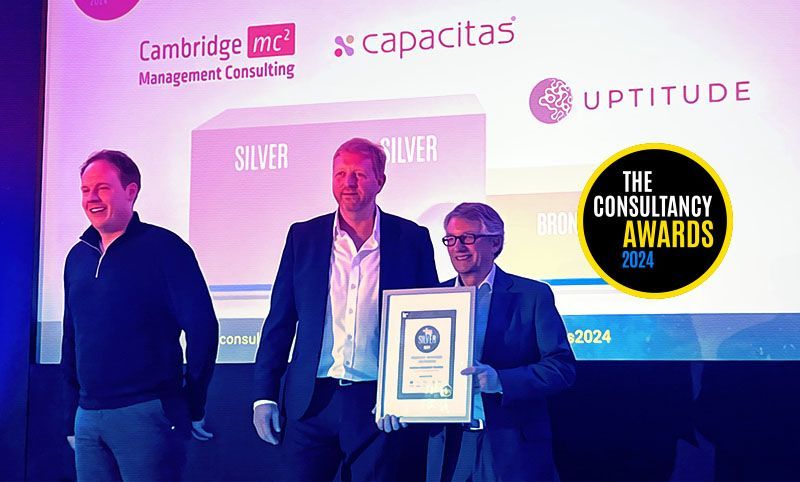
Accepting the Cost Reduction award at the Consultancy Awards 2024
by Tim Passingham 14 June 2024
Last night, we attended The Consultancy Awards 2024 – the annual awards event hosted by The Consultancy Growth Network, with the objective to recognise and celebrate hard work, commitment, and innovation across the consultancy sphere. Taking place at the De Vere Grand Connaught Rooms in London, The Consultancy Growth Network distributed over thirty awards across ten categories to this year’s finalists, of which Cambridge Management Consulting are the proud recipient of three – earning a place in each of the categories we were nominated. This is a testament to not only the impressive quality of talent, ingenuity, and drive present within our company, but throughout the consultancy industry itself. As an industry with collaboration at its heart, last night represented an excellent opportunity to connect with our peers for the shared purpose of uplifting our achievements. Read on the learn about the three different awards we won, and the incredible work our practitioners completed to receive them. Digital Transformation Sponsored by Method Grid, the Digital Transformation award looks to recognise consultancies who have harnessed the power of technology to reinvigorate an organisation; whether that be in making it more efficient, cost effective, or sustainable. Cambridge MC won an award in this category due to our ongoing project management of a multinational oil and gas company, to coordinate the development of a portfolio of high-priority EV charging hub sites throughout big cities. Thus far, we have delivered the successful deployment of the first EV hub site in Luxembourg, eight in the Netherlands, are currently in the process of rolling out further sites in the US and UK, and additional sites in other countries across other several continents. Read more about this project here . Productivity Improvement / Cost Reduction Sponsored by CMap, this award encompasses consultancies and projects which have increased and improved the efficiency, productivity, and operations of an organisation, while also reducing their costs. In this category, Cambridge MC won an award for our delivery of £10m in savings for a large UK online retailer across only thirteen weeks. By leveraging our experience in procurement, contract, and vendor management, we were able to perform a deep dive into all vendor contracts facing the business, establish areas for saving, and engage in supplier negotiations, in order to maximise cost savings while the company was experiencing significant changes in demand. Read more about this project here .
Aerial view of a dock with water on left and rows of containers stacked
by Nigel Meacham 30 May 2024
What is the Procurement Act 2023? Every year, one in every three pounds of public money is spent on public procurement exercises. This amounts to roughly £300bn spent annually to fund public procurement projects, including those within central government departments and their arm’s-length bodies, local government and health authorities, utilities companies operating in the water, energy, and transport sectors, and more. However, the current system for managing and coordinating these movements is convoluted and outdated, comprised of over 350 individual regulations derived from several different sets of EU Directives from different years (e.g. the Defence and Security Public Contracts Regulations 2011, Public Contracts Regulations 2015, Utilities Contracts Regulations 2016, etc.). As such, the UK Government have decided to capitalise on some of the flexibility left by Brexit by repealing these existing regulations, and consolidating them into one single act, the Procurement Act 2023. Having received Royal Assent on the 26 th October 2023, the Act puts forward a revised matrix of rules, clauses, and criteria regarding public procurement provisions that is set to take effect throughout England, Wales, and Northern Ireland in October of this year. Thus, the Act is set to make public procurement ‘ quick, simpler, more transparent and better able to meet the UK’s needs while remaining compliant with [its] international obligations’. In this article, we will highlight and dilate the differences between the new act and its predecessors, why these changes matter and how they will affect and, hopefully, improve the processes of public procurement, and how we can help you prepare for ‘ one of the largest shake ups to procurement rules ’ in the history of UK legislation. What is Different about the Act? The primary difference attached to the Act, and the main repository for the accessibility and transparency promoted by the consolidation of the previous regulations, is in the updated procedure surrounding a covered procurement. Differentiated from a regular procurement, the Act introduces a covered procurement as ‘the award, entry into, and management of a public contract’, exclusively within the public sector. This process is described by the Act as a competitive tendering procedure, and can be understood by breaking it down into before, during, and after. Before: Objectives Before beginning a competitive tendering procedure, it is important that the contracting authority enters the process with the correct narrative and intentions in mind in order to make an informed decision when selecting suppliers. In order to assess this, the Act contains a list of objectives that the authority must internalise and adhere to when evaluating applicants for a procurement exercise. Outlined in Part 2, Section 12 , these objectives dictate that a contracting authority ‘must have regard to the importance of’: a. delivering value for money; b. maximising public benefit; c. sharing information for the purpose of allowing suppliers and others to understand the authority’s procurement policies and decisions; d. acting, and being seen to act, with integrity. These objectives and principles encourage and ensure that the contracting authority will select their suppliers openly and judiciously, with ‘regard to the fact that small and medium-sized enterprises may gave particular barriers to participation, and consider whether such barriers can be removed or reduced’. During: Competitive Tendering Procedures ‘ Competition is at the heart of the regime ’, and, once these objectives have been understood, the contracting authority must apply them to the subsequent selection process by conducting a competitive tendering procedure. This is described in Part 3, Chapter 2, Section 20 as: a. single-stage tendering procedure without a restriction on who can submit tenders (an “open procedure”), or b. such other competitive tendering procedure as the contracting authority considers appropriate for the purpose of awarding the public contract (a “competitive flexible procedure”). It is this second option, the ‘competitive flexible procedure’, which differentiates the procurement legislation outlined in the Act from its predecessors, writing flexibility into the very fabric of the law. Section 20 proceeds to ensure that ‘the procedure is a proportionate means of awarding a public contract, having regard to the nature, complexity and cost of the contract’. As the anticipatory policy paper explains, this is unique as it allows contracting authorities to ‘design a competition to best suit the particular needs of their contract and market’. After: Awarding Public Contracts Once applications and proposals have been entered into a competitive tendering procedure, Part 3, Chapter 2, Section 19 simply dictates that the awarding of the public contract may be granted to the ‘most advantageous tender’ offered, by which it refers to the tender that ‘best satisfies the award criteria’. Aside from permitting the contracting authority to disregard suppliers from outside the UK, or those that offer a price that they consider to be ‘abnormally low for the performance of the contract’, the Act is otherwise open in its criteria, leaving much of the selection to the discretion of the contracting authority and the assurance that they will do so democratically and unbiasedly. That being said, the Act does include provisions for the direct award of a contract which bypasses the competitive tendering procedure. There are two cases for this, as delineated in Chapter 3: Direct Award : Direct Award in Special Cases: This allows for a contracting authority to override the usual competitive tendering process if there is an ‘overriding public interest’ in the selection of a particular supplier; this may be if they require the public contract to construct or maintain critical national infrastructure, ensure the proper functioning of a crucial sector, or if it would otherwise disrupt military or security operations. Direct Award to Protect Life: Similarly, a contracting authority is free to select a particular supplier over others if it contributes to the protection of ‘human, animal or plant life or health’, or otherwise ‘protect public order or safety’. Exclusion & Debarment The Act also expands the criteria for the exclusion of suppliers by contracting authorities. As well as adding new violations such as theft, corporate manslaughter, and competition law infringement, the Act notably introduces the ‘ ability to exclude suppliers based on the status of their associated suppliers and subcontractors, and not solely on their own performance’. This is significant for the way it prevents larger companies from operating on the unfair approach of winning businesses first before sourcing subcontractors to fulfil their contract. Furthermore, the Act also introduces several changes to what constitutes ‘ discretionary grounds for exclusion ’, with a significant addition being ‘Contractual performance relating to contracts where the bidder has underperformed against KPIs and failed to rectify performance following an opportunity to do so’. This speaks to a major issue with previous procurement processes, which is public bodies being met with unsatisfactory contracts due to (a) poor KPIs or a lack thereof, (b) KPIs being unreflective of the buyer’s expectations, or (c) suppliers twisting the definitions or loopholes surrounding their KPIs. As such, using KPIs as a possible exclusionary tool encourages suppliers to take their inclusion and adherence much more seriously. (For guidance and advice on the definition of a reasonable KPI, contact our Procurement & Commercial experts here .) On the increased stringency for debarring suppliers, which also includes more scrutiny on those suspected of modern slavery, Minister for the Cabinet Office Jeremy Quin explained: “We have taken the long-term decisions that will increase our powers to protect our security in our supply chains and procurement. “This has included radical steps such as creating a National Security Unit for Procurement and giving Ministers the power to prevent suppliers from bidding for certain products where there is a risk to national security. It will deliver lasting change which protects the UK for generations to come.” Changing the Face of Procurement As aforementioned, the primary purpose and design of the Act is to promote transparency, simplicity, and accessibility; as the Cabinet Office explains in their green paper, the revamp is directed toward ‘reinforcing and adding clarity rather than changing scope’. In particular, this is intended for the benefit of small businesses and social enterprises , so that they have the opportunity to compete for and win more public contracts. There are several ways in which this philosophy is being implemented, such as: The creation of a central digital platform, on which suppliers can register and enter their details. This allows them to apply for multiple bids more directly, as well as have a more holistic overview of what tenders, projects, and opportunities are upcoming and available. The inclusion of numerous regulation-making powers which will maintain a ‘ modern procurement structure ’, by which the Government defines as concurrent with ‘technological advances, new trade agreements and ahead of those who may try to use procurement improperly’. The encouragement of contracting authorities to assess the boundaries which challenge or inhibit SMEs throughout the procurement lifecycle, and work to consider how they can be resolved and removed. Also within reach of these changes is the Defence Sector, whose procurement activities will also benefit from the increased simplicity and flexibility and a more strategic relationship with the government, catalysing the development of the Defence and Security Industrial Strategy . However, the main emphasis is on SMEs. For example, as discussed, the enhanced criteria for excluding suppliers is not only intended to prevent larger companies from operating on unfair means, by winning bids and putting the pressure on downstream suppliers to fulfil them, but to inversely make it more accessible for smaller and local businesses to bid directly. Cabinet Office Minister Baroness Neville-Rolfe said: “These new rules will help grow the economy and deliver better and simpler public sector procurement. “I am particularly pleased to help small and medium sized businesses secure a greater share of nearly £300 billion worth of government contracts.” How to Prepare for October The Procurement Act 2023 is set to take full effect in October of this year, and though it is designed to make procurement simpler and more streamlined, it is still important for your organisation to understand and anticipate in breadth the nature and extent of the changes it will initiate. For example, the new regulations are not retroactive, meaning that any procurement activity begun under the Public Contracts Regulations (PCR) 2025 will continue to operate within its remit. However, you will still need to consider which of those contracts will expire after the introduction of the new regulations, and form contingencies in advance for reprocuring as early as possible, if this is your intention. The Crown Commercial Service (CCS) has delineated the process of preparing for these new regulations into five workstreams: Commercial activity: review all current and planned commercial opportunities. Standard operating procedures and policies: ensure they are robust and future-proofed for the new regime. Guidance and information: review the documents that your teams and suppliers use and ensure they are current. Systems: consider the readiness of your organisation’s systems and what changes may be needed. People: ensure your people understand Transforming Public Procurement and undertake the necessary training. In addition to this, the CCS has also produced a substantial list of commercial agreements that they expect to be awarded under the new legislation. This is a useful resource to read and internalise in advance of their introduction so as to ready your organisation for their application. How Can Cambridge MC Help? The last of the CSS’ five workstreams refers to a Government initiative paced to make the transition into the procurement activity under the new Act easier and smoother, by releasing intermittent ‘Knowledge Drops’ covering all changes and their effects. However, if you prefer a more hands-on and human-centric approach, our Procurement & Commercial experts possess the real-world experience and expertise to walk you through the new legislation, and prepare your organisation for the shift that it will bring. Furthermore, if you are interested in securing projects and clients in the public sector, speak to our Public Sector team for guidance and support.
Bottom up wide angle view of a glass building with a neon tint
by David Lewis 21 May 2024
“As a consultant, you can have a big impact on the lives of the people in your country.” —David Lewis Last December, David W. Lewis , ( edit: Former ) Managing Partner for Cambridge Management Consulting and lead for Digital & Innovation, was featured in SAWOO’s Leaders in Consulting podcast. A platform which is dedicated to giving a voice to industry experts on salient topics for consultants and advisors, David’s episode specifically contended with ‘Mastering Government Contracts: Expert Advice for Winning Long-Term Government Projects’. An insightful conversation, David joins host Sammy Gebele to break down the complexities of government contracts and developing lasting client relationships. In this article, we will elucidate the main points of this discussion, and highlight the most important steps toward building a presence in the public sector. A Comparison of Winning Projects in the Public versus Private Sector Sammy opens the episode by asking David to differentiate the criteria between applying for and securing work in the public sector, as opposed to regular clients and companies. David explains that there are two main differences: ‘One is frameworks, and the other is lead time.’ By ‘frameworks’, David here refers to the UK Government’s continual emphasis on framework-based procurement, whereby your organisation or one you are partnered with must be on a framework in order to deliver work into the Government. As there are hundreds of frameworks that comprise the UK Government, this requires considerable time to establish which avenues are most relevant to the work you are looking to secure, whether they are appropriate to your business, and how to access them. This, along with other factors such as internal and external politics, can consequently affect the lead time to applying, bidding, and achieving the work in the public sector. This requires your company to be able to absorb a certain amount of time and cost to contribute toward this; the upside, however, is that once this pathway is established and ready, new work within that framework will generally be contracted more efficiently. How to Build Relationships Following this, David goes on to explain the importance of building strong, positive, and trusting relationships with your chosen client. Obviously, these are influenced and dependent on the quality of work completed throughout the project, however David attributes as much significance to open and honest conversation sustained alongside this. For this reason, David warns against ‘mining’ when seeking and selecting projects and work, explaining that he finds a ‘land and expand’ approach to be transactional, as the client can easily assess and intuit when an organisation is more focused on the profit than the outcome. He highlights how this is even more heightened in the public sector, where the work is intended to improve the quality of life for individuals and/or the wider country. How to Stand Out from other Organisations When asked for the primary piece of advice he would give to an organisation looking to secure work in the public sector, David recommends isolating what differentiates your organisation from the other contenders, and emphasising this. Public bodies will be expecting a baseline set of requirements from their applicants anyway, so in order to stand out above these, it is crucial to understand your own value-add to the project. One way to establish and support the USP of your organisation is through forming and sustaining relevant partnerships with other companies who could either benefit from your chosen speciality, or help to foster one within your capabilities. His Majesty’s Government encourages healthy partnerships, and uses its buying power to support the development of a healthy digital delivery SME community. The Benefits of Networking In order to initiate and build these partnerships, it is important to make the most out of networking. David warns against approaching networking from a point of transaction, finding the practice of establishing a ‘quasi-relationship’ purely for the sake of reaping business from it to be disingenuous: ‘That’s where I have a problem: It’s the conversation with intent rather than conversation as humans just communicating.’ It is through this latter avenue, getting to know a person before seeking to understand how they can help you from a business angle, that David has experienced the most fruitful and authentic working relationships. Growing Client Relationships One approach to securing work and relationships within the public sector which David reiterates throughout the podcast is to make yourself redundant by the end of the project. Though this may sound counter-intuitive, especially when it comes to sustaining repeated projects, what he is referring to is a teach-a-man-to-fish methodology whereby you implement your work into the material of the public sector entity so that it can continue beyond the timeline of the project, proving yourself to be a trust-worthy, reliable, and capable partner in the process. The positive extension of this approach is the goodwill built with your clients, which will grow more and more fruit over time. How you can Secure Work in the Public Sector To learn more about David Lewis’ approach to securing work in the Public Sector, or get to know David Lewis and his career in more detail, you can listen to the full episode here . To learn about David’s Digital & Innovation capabilities and offerings and how they can revolutionise your business, visit our Digital Innovation service page here . If any of the topics or challenges outlined in this podcast/article resonate with you or your business, you can reach out directly to David Lewis .
Dubai skyline at night
by Tim Passingham 15 May 2024
Press Release: 16/05/2024 – LONDON, UK - Cambridge Management Consulting (Cambridge MC), one of Europe’s fastest growing and most innovative consultancies, is continuing an ambitious growth strategy with the acquisition of Dubai-based management consulting firm Blue Creek. The acquisition of Blue Creek will expand Cambridge MC’s team and reach to 22 countries globally and embolden our mission to help our clients make a better impact on the world. Blue Creek is an IT and business advisory firm which works with key growth and delivery partners to serve local and regional clients in the FinTech, RegTech, RiskTech, Commerce and Cloud markets. The combination of Cambridge MC’s clients in the Middle East, such as BP and Etisalat, and Blue Creek’s extensive local market understanding expands the strength and knowledge base of our offer to clients, existing and new. Blue Creek’s projects for GCC clients have included digital strategy and technology change assignments across Smart City, SME Sector & tourism development in the UAE and Saudi Arabia, for sovereign asset, technology, government and energy sector clients. Tim Passingham, Founder and Chairman of Cambridge Management Consulting stated “We are delighted to have acquired Blue Creek and to have Owen Stubbs and his associates join the Cambridge MC team. I’m excited by our international expansion plans and our ever-growing ability to serve an increasingly wide variety of clients and vertical markets.” Owen Stubbs, Managing Partner of Blue Creek added “It’s an enormous pleasure to join the Cambridge Management Consulting team and looking forward to helping Cambridge MC grow further internationally into new markets and with new clients.” About Cambridge Management Consulting Cambridge Management Consulting (Cambridge MC) is an international consulting firm that helps companies of all sizes have a better impact on the world. Founded in Cambridge, UK, initially to help the start-up community, Cambridge MC has grown to over 200 consultants working on projects in 22 countries. Our capabilities focus on supporting the private and public sector with their people, process and digital technology challenges. What makes Cambridge Management Consulting unique is that it doesn’t employ consultants—only senior executives with real industry or government experience and the skills to advise their clients from a place of true credibility. Our team strives to have a highly positive impact on all the organisations they serve. We are confident there is no business or enterprise that we cannot help transform for the better. Cambridge Management Consulting has offices or legal entities in Cambridge, London, New York, Paris, Dubai, Singapore and Helsinki, with further expansion planned in future.  For more information visit: www.cambridgemc.com About Blue Creek Blue Creek is a professional IT and business advisory firm that collaborates with strategic growth and delivery partners to cater to the needs of local and regional clients in the FinTech, RegTech, RiskTech, Commerce, and Cloud markets. Our focus is on facilitating business transformation and growth through various means such as product development, technology innovation, investments, M&A, and effective management of key technology risks. We strive to achieve bottom-line success by driving enterprise technology transformation and rationalisation. For more information visit: https://www.bluecreek.ae/
Close up of data centre stack (mesh and circuits)
by Nigel Meacham 14 May 2024
Press Release: 14/05/2024 – Qarbon Technologies (Qarbon), the world’s first platform for securely transferring data between workflow management and data centre systems, is excited to announce the start of an ongoing collaboration with Cambridge Management Consulting (Cambridge MC), an international management consultancy. This will initiate a joint go-to-market strategy, providing Cambridge MC with a digital solution to provide to their portfolio of clients and customers, and provide Qarbon with a management solution for implementing and assisting with a client’s existing infrastructure. Qarbon’s service, LATTICE™, is a SaaS-based orchestration platform designed to provide a single interface between data centres and customers, allowing them to avoid the challenges caused by using multiple providers with varying systems for managing data. This offers a solution to data centre infrastructure which is more secure in its transparency, compliant through its use of OpenAPI, and sustainable by reporting ESG data. Thus, Qarbon and Cambridge MC will together provide an ongoing orchestration platform and service wrap, including data cleansing and management, cost reduction, and procurement services, to a market of international customers and clients who require support or transformation of their digital infrastructure. By implementing LATTICE™, this collaboration between Cambridge MC and Qarbon represents a joint go-to-market strategy, widening Cambridge MC’s portfolio of solutions while allowing Qarbon to further disseminate their service. Robert Davidson, Founder and CEO of Qarbon, said: "Today marks a pivotal moment, as Qarbon Technologies partners with Cambridge Management Consulting to redefine how digital infrastructure is managed and optimised across industries. This collaboration not only amplifies our mission to streamline data workflows through our LATTICE™ platform but also empowers Cambridge MC's clients with transformative, secure, and sustainable digital solutions. Together, we are setting a new standard for operational excellence and strategic growth in the tech sector." Nigel Meacham, Managing Partner for Digital Procurement at Cambridge MC, said: "Cambridge Management Consulting is excited by our collaboration with Qarbon. A combination of Cambridge MC’s experience and innovative consulting, alongside Qarbon’s LATTICE™ orchestration platform, is truly unique, providing clients with an approach for managing data centre estates going forward that is based on reliable, cleansed, and normalised inventories." About Qarbon Technologies Qarbon is creating the world's first SaaS-based orchestration platform for secure, seamless integration of data centre infrastructure and customers' existing business applications. It unlocks data contained in a multitude of data centre infrastructure systems and seamlessly integrates it with customer's business applications like ServiceNow and Salesforce. Qarbon's first product, Qarbon LATTICE™, provides customers with a single, ubiquitous interface between their data centres and their business systems, eliminating the current complexity, friction, cost, security, and observability issues caused by existing manual workflows and enabling secure, plug-and-play workflow automation. Whether to reduce energy costs, increase operating efficiency, track inventory, comply with ESG reporting, or anything else—Qarbon is your solution for data about the data centre. For further details, visit: www.qarbontech.io About Cambridge Management Consulting Cambridge Management Consulting (Cambridge MC) is an international consulting firm that helps companies of all sizes have a better impact on the world. Founded in Cambridge, UK, initially to help the start-up community, Cambridge MC has grown to over 200 consultants working on projects in 22 countries. Our capabilities focus on supporting the private and public sector with their people, process and digital technology challenges. What makes Cambridge Management Consulting unique is that it doesn’t employ consultants—only senior executives with real industry or government experience and the skills to advise their clients from a place of true credibility. Our team strives to have a highly positive impact on all the organisations they serve. We are confident there is no business or enterprise that we cannot help transform for the better. Cambridge Management Consulting has offices or legal entities in Cambridge, London, New York, Paris, Dubai, Singapore and Helsinki, with further expansion planned in future. For further details, visit: www.cambridgemc.com
Sunset image of a group of children on a slope in silhouette
by Lucas Lefley 30 April 2024
Who are Sands? Established over 40 years ago by bereaved parents, Sands (originally an acronym for the Stillbirth and Neonatal Death Society but now simply referred to as Sands) is a non-profit organisation devoted to improving the care and support for anyone affected by the loss of a baby, and ultimately decreasing the number of those who experience it. According to their website , 13 families a day are affected by the heartbreak of losing a baby, whether that be before, during, or after birth, and at least 15% of pregnancies end in miscarriage. Sands recognises that child-loss does not follow a linear process, and as such aims to make the bereavement journey more manageable for the wider network of family, friends, and healthcare professionals involved, by establishing national bereavement care pathways. In short, ‘to ensure that every bereaved parent and family receives the best possible care wherever they are in the UK’. Sands achieves these ventures by working in partnership with healthcare professionals, health trusts, and boards, and offers a variety of training programmes and bereavement care resources to prepare healthcare staff for the loss of a baby. They also promote crucial research to increase understanding and knowledge regarding the causes of infant loss and avenues for improving the safety of both mothers and babies. Further to this, they raise awareness of such issues and collaborate with governments and other stakeholders to elevate them to the priorities that they should be. The 9 Bereavement Care Standards Sands launched the 9 Bereavement Care Standards as part of the National Bereavement Care Pathway during Baby Loss Awareness Week in 2018. Produced as a result of stories and testimonials told by parents affected by pregnancy loss or the death of a baby, these standards are comprised of 9 different protocols and expectations, and provide a concise and comprehensive guide for how each NHS trust should support a parent or family during and after the loss of an infant. Several of these are designed to be implemented into the infrastructure and running of the NHS trust in question: no. 5 designates that ‘Bereavement rooms are available and accessible in all hospitals’, so that grieving parents can begin to process their experience and emotions in privacy, peace, and quietude; no. 8 advises that a ‘system is in place to clearly signal to all health care professionals and staff that a parent has experienced a bereavement’ in order to prevent the harmful elongation and disruption of their grief, and repetition of ‘having to tell their story again and again’; no. 2 suggests that ‘training is offered to staff who come into contact with bereaved parents’, a provision which Sands can resource; and no. 4 employs the role of a ‘bereavement lead in every healthcare setting where a pregnancy or baby loss may occur’. Further to this, some of the standards cover protocols to be enacted immediately following the tragic loss of an infant. No. 6 makes this moment as sensitive and personalised to the parents as possible, by making sure that the ‘preferences of all bereaved families are sought’, particularly regarding ‘decisions relating to their care and the care of their babies’. Depending on the wishes of the families, this may result in the inclusion of no. 3, which ensures ‘emotional support [and] specialist mental health support’ if requested, and/or no. 7, in which the bereaved parents are ‘offered opportunities to make memories’. The latter refers to the reversal of an antiquated practice whereby, in the 1970s when Sands originated, deceased babies would be removed from the room immediately before their parents could see them; however, many studies have highlighted the importance of the mother spending time with the baby, and to form physical and emotional bonds as they would with a living infant. Thus, ‘making memories’ allows parents and families to retain sentimental items such as a teddy bear, a cast of the child’s feet or hands, and anything else that will allow them to keep a part of what they have lost. And several others are to be established before the loss of an infant occurs – not to promote fearmongering for prospective parents, or attempt to mitigate the shock caused by such a traumatic event, but to make sure everyone involved is at least somewhat prepared so that those affected enter the most comfortable environment and setting without the further disorientation of a buffer or delay. This includes the very first of the nine Standards, which promotes the preparation of a ‘parent-led bereavement care plan’ so that all of the appropriate resources are readily available, and, to further this, no. 9, which instructs healthcare professionals to be equipped with enough ‘support and resources to deliver high quality bereavement care’. How Cambridge MC is Supporting Sands It is this final standard, no. 9, which Cambridge Management Consulting is striving to support in collaboration with Sands. Since beginning this journey in 1978, Sands has taken advantage of technological advancements and their benefits to make such research and work both more sophisticated and, more importantly, more accessible. As well as a UK-wide network of around 100 support groups, Sands disseminate their support and resources through a Freephone helpline and online community. Now, as a technology-forward consultancy, with a collective wealth of technical expertise, Cambridge MC is aiming to bring this same accessibility and visibility specifically to the 9 Bereavement Care Standards. Considering how important, and often urgent, the Bereavement Care Standards are to improving the wellbeing of bereaved families, healthcare professionals previously reported struggling to find them readily available, thus stunting their ability to provide the proper care imminently and effectively. Thus, Cambridge MC’s marketing and IT experts have, pro bono, produced a new landing page specifically for the National Bereavement Care Pathway and the 9 Standards, to make their implementation in UK-wide hospitals as easy and seamless as possible. Karl Salter, Head of Marketing for Cambridge MC and project lead for the website, said: ‘Sands is an incredible cause, bringing light to such an important issue and vastly improving the wellbeing of those affected by it. It is an honour, and very moving, to be able to bring further awareness to this work.’ Marc Harder, Head of Bereavement Care & Hospital Liaison at Sands, said: ‘Healthcare professionals across the UK find themselves in a challenging environment at the best of times, and caring for newly bereaved parents requires a specialised set of people skills. The resources Sands and its partners provide are crucial to equipping the workforce to care for parents when they need it most, and we are so grateful to Cambridge MC in supporting this aim by creating the new NBCP website pages which will make accessing tools and resources so much easier.’ To learn more about Sands and their incredible work, particularly if you have been affected by any of the sentiments outlined in this article, click here . To visit the new landing page for Sands' National Bereavement Care Pathway, click here .
A couple standing in front of a neon portal to representing stepping into an AI future
by Tom Burton 25 April 2024
In this article, Tom Burton, a cyber security expert and technology thought leader, addresses the historical roots of our implicit trust in computers. As AI models increasingly begin to mimic human traits such as memory and learning, he asks how we can better manage risk and evaluate trust in an era of AI technology.
An abstract digital pattern in neon blue
by Stuart Curzon 24 April 2024
Press Release: 24/04/2024 - LB Networks, an industry leader in service-based business intelligence and customer-facing portal solutions to carriers, is excited to announce a partnership with Cambridge Management Consulting (Cambridge MC), a globally renowned international management consultancy. This partnership is to expand LB Networks’ reach as well as Cambridge MC’s portfolio of tech-based solutions, by allowing Cambridge MC to represent LB Networks and co-develop a market strategy to penetrate the EMEA markets. Service providers use LB Networks’ solutions to solve their digital transformation challenges while providing immediate contribution to margins. LB Networks’ OcularIP and Business Service Portal differentiate carriers’ service and provide brand relieving price pressure while increasing ARPU and accelerating client acquisitions. Robert Kittner, Chief Revenue Officer at LB Networks, said, "We are excited to partner with Cambridge MC. Their experience and expertise in delivering innovative solutions to telecoms is well recognised and we are appreciative that they committed to representing our solution throughout EMEA." Stuart Curzon, Chief Commercial Officer at Cambridge MC, said, "Our global team of consultants are experts at helping telecoms scale through effective solutions. LB Networks’ applications are proven to provide unique value for telecoms. From concept through to execution, we will use our broad communications industry experience to support LB Networks as they expand the reach of their impressive portfolio application." About LB Networks LB Networks is a SaaS solution provider focused on digital transformation for telecoms by providing unique solutions that leverage carriers’ current infrastructure and optimise availability reporting. LB Networks is empowering hundreds of carriers worldwide to optimise their service delivery reporting and visualisation. These carriers have saved millions in costs while growing revenues with an award-winning Business Service Portal. Their success-based model can be implemented in days. For further details, visit www.lbnetworks.co . About Cambridge Management Consulting Cambridge Management Consulting (Cambridge MC) is an international consulting firm that helps companies of all sizes have a better impact on the world. Founded in Cambridge, UK, initially to help the start-up community, Cambridge MC has grown to over 200 consultants working on projects in 22 countries. Our capabilities focus on supporting the private and public sector with their people, process and digital technology challenges. What makes Cambridge Management Consulting unique is that it doesn’t employ consultants—only senior executives with real industry or government experience and the skills to advise their clients from a place of true credibility. Our team strives to have a highly positive impact on all the organisations they serve. We are confident there is no business or enterprise that we cannot help transform for the better. Cambridge Management Consulting has offices or legal entities in Cambridge, London, New York, Paris, Dubai, Singapore and Helsinki, with further expansion planned in future. For further details, visit: www.cambridgemc.com .
A loopy abstract digital pattern in neon blue and magenta
by Daniel Fitzsimmons 18 April 2024
Ensure seamless project closure with Cambridge MC’s Change Management framework—from handovers and formal sign‑off to vendor contract closure, lessons learned, and resource release—for accountable, transformation‑lasting results.
A vineyard at sunset
by Pete Nisbet 17 April 2024
edenseven Supports Direct Wines’ Progress to Net Zero By providing a carbon assessment and supporting global supplier engagement. Direct Wines Ltd (Direct Wines) is an international and independent wine merchant which launched its first non-UK business in 2007 and currently has operations across the globe, with over 450 suppliers in their network and employing approximately 1,000 people. Direct Wines owns Laithwaite’s Wine and Averys in the UK, as well as owning and operating a number of their own vineyards and wine-making facilities in the UK, France, USA, and Australia. Direct Wines engaged edenseven, one of the Cambridge Management Consulting group of companies, to support the acceleration of their sustainability programme, with a clear focus on engaging their supply base. Project Overview To research the different techniques being adopted across the globe to sequester (store) carbon within the wine-growing community. The final report would need to show technical in-depth research and be summarised in a format to enable general circulation. Create a muti-language online questionnaire focussed on benchmarking Direct Wines’ supply chain engagement levels relating to decarbonisation. This analysis would be summarised and presented to the board. To create an engagement plan with key suppliers across multiple regions to provide a variety of consultative services to enable the acceleration of decarbonisation. Skills & Knowledge An environmental expert with an in-depth knowledge of carbon sequestration and best practice techniques. Digital capability to produce a multi-language questionnaire and host it on a separate domain to Direct Wines. A clear understanding of an appropriate questionnaire structure, which will product meaningful quantifiable data, while assuring a high response rate. Experience in delivering bespoke carbon reduction and benchmarking projects across different geographies. Outcome & Results Market Analysis : A structured research paper giving clear guidance on the methods used to sequester carbon across multiple regions. This gave Direct Wines a document which would be distributed to senior stakeholders and suppliers to help positively impact their overall Scope 3 emissions. Supply Chain Assessment : A clear benchmark of Direct Wines supply chains current understanding an progress to achieve net zero. This gave Direct Wines the ability to identify individual suppliers who needed support to move forward. Programme Development : The delivery of a programme of work across selected suppliers which consisted of carbon foot-printing assessment, renewable energy feasibility studies, best practice gap analysis, and data reviews.
Aerial view of Peterborough, UK
by Pete Nisbet 19 March 2024
Press Release: 26/03/2024 – edenseven , one of the Cambridge Management Consulting group of companies, is excited to announce that they have, within a consortium led by Peterborough City Council (PCC), been awarded a £2.75m grant by Innovate UK, part of a total £3.2m project, to boost the local authority’s ability to achieve net zero. This success is testament to PCC’s ambition to deliver a Net Zero City, the essential role that local authorities play in delivering carbon reductions nationwide, and the goal shared by edenseven and the rest of the consortium to support this journey. Working alongside edenseven and PCC, this consortium includes Cambridgeshire County Council, Nordic Energy, Energy Systems Catapult, and PECT. The shared aim of this team is to deliver ‘Peterborough Accelerated Net Zero (PANZ)’ over the next 18 months. This venture is designed to encourage healthier living, reduce costs, and develop a sustainable green skills market. Peterborough was one of the first cities in the UK to adopt a Local Area Energy Plan, which considered the current and future energy demands of heating, electricity, and transport, and laid out its pathway to reach Net Zero. PANZ will pioneer an approach to build on this Local Area Energy Plan, tailoring solutions to the needs of community and place. The project will support the Council in selecting projects that deliver on both carbon reduction and the Council’s many other aspirations for the city. It will encourage financial bundling of projects to create portfolios that can attract private investment, including district heating, and it will enable the Council to track the progress and impact of city-scale projects, making sure investment is directed toward the biggest environmental, social, demographic, and economic impact. edenseven aims to transform the way Local Authorities navigate the complex transition to Net Zero by developing an intuitive, tailor-made, carbon accounting and management platform that can provide a complete view of city-wide emissions and decarbonisation plans. It will give the Council a clear understanding of its current position against Net Zero targets, create insight to identify areas where action is required, and uses the reporting functionality to measure progress. Pete Nisbet, Managing Partner for edenseven, said: “In these pivotal years for decarbonisation in the UK, edenseven is thrilled to be collaborating with Peterborough City Council and the consortium on their Net Zero strategy. We recognise the critical role local authorities play in decarbonising the UK economy and are delighted to partner with forward-looking councils such as Peterborough and Cambridgeshire. This partnership creates a cross functional team equipped to deliver immediate actions for the local economy, as well as supporting the efficient future management of Net Zero projects. It marks the inception of a unique partnership across the public. private and third sectors and showcases our commitment to pioneering sustainable solutions that create social impact.” For more information about the Innovate UK funding, visit Innovate UK invests over £25m in net zero projects – UKRI About edenseven edenseven is a sustainability consultancy and technology provider that uses data and market experience to enable companies and their supply chains to play their part in tackling climate change while achieving sustainable growth. edenseven uses the combined power of data, advanced analytics, and pragmatic project management to help companies baseline their status, identify improvement opportunities in the short, medium, and long terms, and plan and implement those opportunities. For more information, visit our website: www.edenseven.co.uk
by Pete Nisbet 19 March 2024
edenseven Supports Greater Anglia to Clarify their Decarbonisation Strategy By conducting a renewables and energy reduction and feasibility study, and a net-zero strategy review. Greater Anglia is a train operating company in Great Britain owned as a joint venture by Abellio and the Japanese trading company, Mitsui & Co. As a large user of energy with a complex portfolio of sites, Greater Anglia sees the importance of developing a clear and structured decarbonisation strategy across their network of stations, offices, and depots. Greater Anglia engaged edenseven, one of the Cambridge Management Consulting group of companies, to review their current sustainability strategy, benchmarking against best practices. Specifically, Greater Anglia requested that edenseven assess one of their largest depots for potential on-site renewable generation and energy reduction opportunities. Project Overview Greater Anglia needed an assessment of the current ‘as is’ status of their sustainability framework. The model needed to deliver the following: Assessment of current targets, data, and governance. Benchmark against sustainability best practices. Outline recommendations and next steps. Furthermore, Greater Anglia requested that edenseven conduct a site visit to review one of their largest depots and deliver the following: On-site renewable energy opportunities, outlining planning and infrastructure requirements. Assessment of immediate energy reduction ‘quick wins’ and potential capex requirements. Business case development, outlining paybacks, key recommendations, and next steps. Skills & Knowledge Expertise in net-zero strategy development and best practices. A clear understanding of key milestones in the delivery of a sustainability strategy. A detailed understanding of multiple renewable technologies and infrastructure requirements. A clear view of energy efficiency projects and which have the best environmental and financial return. Ability to write investment grade business cases to support decarbonisation projects. Outcome & Results Organisational Clarity : edenseven reviewed and created a clear report outlining the current ‘as is’ status of Greater Anglia’s sustainability strategy as well as key recommendations and potential next steps.  Analysis & Evaluation : Undertook an on-site survey and liaised with Greater Anglia’s engineering team members to integrate site characteristics into the evaluation process. Investment Grade Report : Delivered an investment grade report clearly highlighting paybacks and a key plan of delivery.
A neon triangle light in orange
by Jeff Owen 14 March 2024
Readiness and Resilience It is inevitable that an acquisition, merger, or divestiture will significantly change the structures, processes, department structures, and job profiles of both the buying and selling organisation. In order to properly monitor this it is important to fully integrate both Human Capital Management (HCM) systems and people into the TSA process, design, and delivery. There are certain obvious elements that show up throughout the TSA, such as payroll transfer, employee data transfer, HR systems transition, and the transition of other HCM applications that guide the employee life-cycle. Less obvious is the need to measure the readiness and resilience of transferring personnel and those departments affected by the integration. This requires a keen and consistent timeline throughout the life-cycle of the TSA. We usually recommend snapshots at 30, 60, and 90 days, however the full integration after acquisition can take as long as 24 months. Measuring workforce resilience at regular intervals will give the board of the acquiring employer a reality check by providing metrics that reveal the likelihood of achieving a successful implementation. We also recommend using a system to measure workforce resilience prior to starting your integration. This system should provide statistically verified data on organisation, functional, department, team, job profile, and individual levels. Management dashboards based on this data provide insight and root cause analysis for underlying problems. The best systems also offer after-care support on a company and individual level, but we will return to ways you can maintain employee morale later in the article. Culture Shock Though merging two business cultures is oft-cited as huge factor throughout M&A, it is one that is typically, poorly understood and implemented. One particularly disastrous example is that of Amazon’s purchase of Whole Foods in the US, demonstrating what happens when two diametrically opposed cultures clash with little or no planning for integration. Employees vote with their feet, and if you fail to handle the integration process adequately you will face staff shortages and a loss of critical expertise and knowledge. As aforementioned, low employee experience occurs when companies do not understand change readiness levels and workforce resilience. Thus, establishing a baseline is essential to planning a migration and subsequently monitoring its success rate during the migration. These two metrics can also impact the reliability of the succession plan and talent pipelines. Transferring employees must know what kind of environment they are stepping into. As the acquiring company, you must try to eliminate potential psychological factors that might make new employees feel at risk or uncertain about their future. These can be eliminated by a strong communication strategy, and the easiest to spot are concerns regarding: Job security Clarity about the new company culture Organisational change effectiveness Change in management Introduction to new colleagues Adapting to new systems that drive ‘old’ processes and procedures into a new standardised environment Getting used to working in new locations and any additional commuting time or stress from moving their home These are just a small list of HCM items that ought to be taken seriously throughout the transformation and integration process. Early involvement of your workforce throughout this transition will support improved employee experience, workforce resilience, and retention. It is imperative to address all of these concerns via a communication process that includes one-to-one interviews and a positive introduction to a new company culture. Incentives and Interviews This positive introduction can be secured by giving special attention to retaining those employees that are intricately involved in implementing the transition while unaware of the extent of their job security beyond completion. Not only can such levels of uncertainty can quickly and drastically impact morale, thus leading to higher levels of attrition, but the cost of replacing an employee can set your organisation back by an average of six months. Luckily, there are two main ways to mitigate this: Incentives: There are a number of ways to incentivise employees throughout a transition, such as offering a retention bonus to persuade employees to stay, as well as more long-term benefits such as retirement plans. Both of these demonstrate and prove proper care for employees. Another way to ensure this is through a strong benefits programme, including incentives such as paid vacation, meal breaks, social security, health insurance, perks and bonuses, achievement awards, employee allowances, and room for pay raises. This can be further substantiated by offering opportunities for upskilling and reskilling. Employee anxiety can be escalated within duplicate roles, and thus it is important to remind those affected that their skillsets are still an asset to the company. This can be achieved by offering to train them for new roles that might better suit them under new arrangements. This displays a willingness to invest in the development of your employees, and in return they will pay back your organisation in loyalty and productivity. Interviews: Incentives are one thing, but of course the best way to achieve a strong narrative for communication is exactly that: communication. This can be carried out through 1-to-1 interviews with new employees in order to assess their expectations. It is important to start this early: send a senior leader to the seller once announcements have been made and conduct these interviews. It is also worth producing a presentation to the group that reinforces your narrative. Calculating Cost Another significant benefit for fully integrating the HCM framework into the design and development of your TSA is to build in a critical and complete review and understanding of the total rewards cost of the acquired workforce. This includes an acknowledgments of the employees relations conditions that are in-place and conducting a litigation review. In Europe, the TSA needs to accommodate and comply with the Transfer of Undertakings Protection of Employment (TUPE) legislation (as well as other legal considerations which will be covered shortly). An establishment of the total rewards cost and litigation review is now considered an essential part of the TSA process, and should include: The structure of employment contracts in place, both permanent and fixed term; Contractual elements that have been arranges in the employment contracts; Collective labour agreements with, for example, work councils; A CLA in place to drive employee relations and the format of employment contracts; Review on probation practices; Excess notice periods agreed shortly before the acquisition; Compensation practices and guidelines; Benefits practices and guidelines and their financing mechanisms; and Practices that deviate from normal practices. What Can Go Wrong? As aforementioned, there are also numerous legal issues to consider, which are just as important throughout M&A processes as financial issues. One easy way to mitigate these is by hiring an M&A lawyer to avoid the threat of litigation. One responsibility of the M&A lawyer is to conduct a litigation review. This should concentrate on a variety of events that can be identified while employing a workforce, including: Liability for staff on long-term absence; Staff dismissal procedures (such as an industrial tribunal); Grievance history reviews; Staff H&s litigation cases; Redundancy programmes history review; Redundancy litigation cases; Minimum wage compliance; Meeting GDPR standards and compliance/regulatory standards; and Any code of conduct or SOX litigation cases. This, along with the financial obligations outlined in the previous section, may seem like a lot to cover, but acknowledging them early will save an unmeasurable amount of time, money, and stress throughout the process as a whole. To find out more about our M&A services, go to our M&A homepage . If you have a specific question or would like to talk to one of our experts, please get in touch .
SHOW MORE

Featured Case Studies


by Pete Nisbet 7 November 2024
edenseven Designs Energy Supply Strategy for H2 Green By conducting an energy sourcing review and engaging with suppliers H2 Green are a large-scale hydrogen storage business with a focus onsite close to towns and cities across the UK. H2 Green’s ambition is to build hydrogen hubs that deliver large amounts of hydrogen, providing security of supply for multiple users across whole regions. H2 Green engaged edenseven, one of the Cambridge Management Consulting group of companies, to build an electricity supply strategy to meet their growth aspirations and environmental requirements. Project Overview To provide a clear outline of the contracting structures within the UK electricity market which would support the green credentials of the business. Structures needed to range from REGO back supply contracts to more complex long-term renewables agreements. All contracting requirements needed to meet the ‘Renewables Transport Fuel Obligations’ and ‘Low Carbon Hydrogen Standard’. Investigate the commercial opportunities short short-term flexibility of assets and liaise with the supply commodity on product development. Support in consultations to government departments relating to the proposed price support mechanism. Skills & Knowledge An energy expert with a detailed knowledge of the UK energy market, with a specific understanding of the evolving policy landscape and how green hydrogen fits into the government’s forward plans. An insight into global commodity markets and the various contracting structures currently in place across the supply community. A clear understanding of how assets can be utilised in the short-term trading markets and the value of ‘optionality’. An individual who holds key relationships across the supply community to enable product development and the ability to influence existing standardised offerings. Outcome & Results Market Analysis : The delivery of a clear and concise view of all the contracting structures currently being provided with the UK electricity market; this included both physical and financial products. Engagement with Government Bodies : A well-considered submission to the relevant government bodies in response to a published consultation. This outlined the appropriate pricing and support structure needed to accelerate the Green Hydrogen Industry. Supplier and Investor Relationships : The creation of a strong link to key suppliers and investors within the energy market. Promoting the development of Green Hydrogen and the benefits it can bring to global decarbonisation.

by Pete Nisbet 23 July 2024
edenseven Helps ISS to Decarbonise their Operations By conducting a review of their market and target audience to align their organisation with their sustainability goals. ISS is a leading workplace experience and facility management (FM) company which provides placemaking solutions that contribute to better business performance and make working life easier, more productive, and more enjoyable. With a significant presence in the build environment, ISS has a clear focus on delivering sustainable services to their customer base, helping them to achieve their net zero ambitions. edenseven , one of the Cambridge Management Consulting group of companies, were commissioned to review ISS’ current sustainability market offering, and, through an engagement programme, make sure that it was aligned to the requirements of their customers’ long-term sustainability ambitions. Project Overview To review the current market relating to sustainability services within the sector and outline the different types of structures and products being offered. Assess the current product and service positioning of ISS and review how they are being presented and articulated to the internal delivery teams and customer base. Create a clear and concise value proposition which outlines ISS’ breadth of services, and which can be communicated to customers by a broad cross section of the ISS team. Through a customer engagement programme, test the value proposition with a set of key accounts and record areas where refinement would be needed to align it to their requirements. Present findings to the ISS UK board and provide clear feedback and next steps. Skills & Knowledge Data Analysis: A broad knowledge of both the FM and sustainability sectors, and an ability to articulate findings from market research and stakeholder/customer interactions in an effective manner. Report Generation: Create documentation and reports which deliver complex requests and findings in a concise and clear manner to senior stakeholders and customers. Stakeholder and Customer Engagement: Build a continuous feedback loop to senior stakeholders within ISS and across key customer accounts. edenseven captured and reviewed customer needs and service requirements to produce effective and timely decision making. Outcome & Results Market Awareness: A clear understanding of market trends and contractive characteristics relating to sustainability services in the FM sector. Organisational Clarity: An outline of current services and how they are delivered through the sales process. Value Proposition: A clear and relatable value proposition which captures all services in a format which can be delivered by a broad cross-section of the ISS workforce. Forward Planning: A board-level presentation and report outlining key findings and next steps to deliver existing and new services which are focussed on meeting key customer requirements.

A vineyard at sunset
by Pete Nisbet 17 April 2024
edenseven Supports Direct Wines’ Progress to Net Zero By providing a carbon assessment and supporting global supplier engagement. Direct Wines Ltd (Direct Wines) is an international and independent wine merchant which launched its first non-UK business in 2007 and currently has operations across the globe, with over 450 suppliers in their network and employing approximately 1,000 people. Direct Wines owns Laithwaite’s Wine and Averys in the UK, as well as owning and operating a number of their own vineyards and wine-making facilities in the UK, France, USA, and Australia. Direct Wines engaged edenseven, one of the Cambridge Management Consulting group of companies, to support the acceleration of their sustainability programme, with a clear focus on engaging their supply base. Project Overview To research the different techniques being adopted across the globe to sequester (store) carbon within the wine-growing community. The final report would need to show technical in-depth research and be summarised in a format to enable general circulation. Create a muti-language online questionnaire focussed on benchmarking Direct Wines’ supply chain engagement levels relating to decarbonisation. This analysis would be summarised and presented to the board. To create an engagement plan with key suppliers across multiple regions to provide a variety of consultative services to enable the acceleration of decarbonisation. Skills & Knowledge An environmental expert with an in-depth knowledge of carbon sequestration and best practice techniques. Digital capability to produce a multi-language questionnaire and host it on a separate domain to Direct Wines. A clear understanding of an appropriate questionnaire structure, which will product meaningful quantifiable data, while assuring a high response rate. Experience in delivering bespoke carbon reduction and benchmarking projects across different geographies. Outcome & Results Market Analysis : A structured research paper giving clear guidance on the methods used to sequester carbon across multiple regions. This gave Direct Wines a document which would be distributed to senior stakeholders and suppliers to help positively impact their overall Scope 3 emissions. Supply Chain Assessment : A clear benchmark of Direct Wines supply chains current understanding an progress to achieve net zero. This gave Direct Wines the ability to identify individual suppliers who needed support to move forward. Programme Development : The delivery of a programme of work across selected suppliers which consisted of carbon foot-printing assessment, renewable energy feasibility studies, best practice gap analysis, and data reviews.

by Pete Nisbet 19 March 2024
edenseven Supports Greater Anglia to Clarify their Decarbonisation Strategy By conducting a renewables and energy reduction and feasibility study, and a net-zero strategy review. Greater Anglia is a train operating company in Great Britain owned as a joint venture by Abellio and the Japanese trading company, Mitsui & Co. As a large user of energy with a complex portfolio of sites, Greater Anglia sees the importance of developing a clear and structured decarbonisation strategy across their network of stations, offices, and depots. Greater Anglia engaged edenseven, one of the Cambridge Management Consulting group of companies, to review their current sustainability strategy, benchmarking against best practices. Specifically, Greater Anglia requested that edenseven assess one of their largest depots for potential on-site renewable generation and energy reduction opportunities. Project Overview Greater Anglia needed an assessment of the current ‘as is’ status of their sustainability framework. The model needed to deliver the following: Assessment of current targets, data, and governance. Benchmark against sustainability best practices. Outline recommendations and next steps. Furthermore, Greater Anglia requested that edenseven conduct a site visit to review one of their largest depots and deliver the following: On-site renewable energy opportunities, outlining planning and infrastructure requirements. Assessment of immediate energy reduction ‘quick wins’ and potential capex requirements. Business case development, outlining paybacks, key recommendations, and next steps. Skills & Knowledge Expertise in net-zero strategy development and best practices. A clear understanding of key milestones in the delivery of a sustainability strategy. A detailed understanding of multiple renewable technologies and infrastructure requirements. A clear view of energy efficiency projects and which have the best environmental and financial return. Ability to write investment grade business cases to support decarbonisation projects. Outcome & Results Organisational Clarity : edenseven reviewed and created a clear report outlining the current ‘as is’ status of Greater Anglia’s sustainability strategy as well as key recommendations and potential next steps.  Analysis & Evaluation : Undertook an on-site survey and liaised with Greater Anglia’s engineering team members to integrate site characteristics into the evaluation process. Investment Grade Report : Delivered an investment grade report clearly highlighting paybacks and a key plan of delivery.

Digital screen with lines and numbers representing a network
by John Madelin 28 February 2024
Introduction The National Counterintelligence & Security Center (NCSC) suggests that universities are particularly vulnerable to cyber crime because they are key contributors to the economy, skills development, and innovation. Cambridge MC was approached to conduct a comprehensive cyber capability maturity assessment for a major UK academic institution, leveraging a team of experts with technical understanding and frontline experience in cyber defence. This team carried out a thorough evaluation through a series of tests, interviews, and artefact examinations. Unlike conventional assessments, our strategy focused on actionable insights which were tailored to the unique operational context of the institution. The assessment was structured around recognised capability categories, informed by the team’s extensive experience defending against cyber attacks. The methodology was particularly effective for its sensitivity to the institution’s risk appetite—balancing cost, risk, and investment to propose solutions that were unique to their situation. Project Overview The primary challenge was the institution’s realisation that its existing cyber hygiene practices and IT discipline might not be sufficiently robust to withstand increasingly advanced tactics employed by cybercriminals and their growing interest in the education sector. The institution sought out Cambridge MC to identify these vulnerabilities, assess the overall maturity of its cybersecurity practices, and recommend strategic improvements. This meant not only highlighting technical deficiencies, but also providing a holistic evaluation of the institution’s security posture, considering the practical realities of defending against threats. This included an assessment of the institution’s risk readiness, infrastructure resilience and staff preparedness. Cambridge MC’s goal was to ensure that the recommendations produced as a result of this assessment were not only technically sound but contextually appropriate and aligned with the institution’s strategic objectives and resources constraints. This personalised approach was crucial in designing a cyber security strategy that was both achievable and sustainable. Strategy What we did Our approach involved a thorough assessment of the institution’s cyber infrastructure, including tests, interviews, and the examination of artefacts to gain a holistic understanding of their cyber maturity. To do this, we engaged experts with significant technical depth and extensive experience in cyber defence and leadership roles; a blend which was crucial in conducting a maturity assessment that focused on pragmatic gap closures. Why we did it this way Our methodology was designed to move beyond mere technical details and address the practical aspects of cyber security. By organising our work into recognised capability categories, we targeted areas that, if weak, would likely lead to vulnerability and a high risk of attack. This approach allowed us to pinpoint critical gaps in the institution’s cyber security practices and propose target improvements. Concepts and methodologies applied We applied a risk-based approach, sensitive to the institution’s risk appetite, to make practical trade-offs between cost, risk, and investment. This ensured that our recommendations were contextually appropriate and aligned with the institution’s strategic objectives. Our assessment framework was grounded in industry-best practices and standards, tailored to the unique needs and challenges of the academic sector. Obstacles encountered and overcoming them One of the main obstacles we encountered was resistance to change, a common challenge for institutions with established routines and cultures. To overcome this, we emphasised the importance of cyber hygiene and IT discipline through clear, evidence-based findings and recommendations. We conducted workshops and discussions to engage stakeholders at all levels, highlighting the tangible benefits of enhancing their cyber security posture and demonstrating how our recommendations could be implemented in a manageable manner. The Team The Cambridge MC cyber security team tasked with supporting on this project was comprised of: A technically adept practitioner specialising in vulnerability testing, equipped with cutting-edge knowledge of tools and techniques for identifying weaknesses in the institution’s cyber defences. This role was crucial for uncovering hidden vulnerabilities that could be exploited by attackers, providing a technical foundation for the assessment. Back-office risk experts with a deep understanding of the broader risk landscape and risk management principles, ensuring that the assessment considered not just technical vulnerabilities but also organisational and procedural risks, aligning the cyber security strategy with the institution’s overall risk appetite. A security leader with 30 years of experience building and running security services, who offered strategic oversight and practical insight into effective cyber defence mechanisms and was vital in ensuring the recommendations were not only theoretically sound but also pragmatically achievable. Together, these professionals ensured a comprehensive, nuanced, and highly practical assessment, underlining the importance of a balanced team in addressing complex cyber security challenges. Outcome & Results Optimised Cyber Resilience We recommended and outlined a robust workflow and identity management system across all of the institution’s systems, emphasising the need for multi-stakeholder cooperation. This highlighted the challenge of managing over tens of thousands of accounts for a community of many fewer staff and students. Longevity We made clear, actionable recommendations describing implementation plans for changes, such as improving the security culture and some operational deliverables associated with SOC efficacy, all of which were agreed upon by the leadership team who assured us that these changes would be in place at this institution for the next three years. Staff Readiness We enhanced the security awareness and training of the staff, postgraduate researchers, and students, including specialised training for the Information Security team. We also made recommendations for improving security posture, such as the adoption of Cloud Access Security Broker (CASB) and Data Leakage Prevention (DLP) solutions, and the development of a quantitative risk forecasting methodology. Forward Planning We also made suggestions for future improvements, including SOC operational activities, creating new initiatives targeting cyber kill chain strategy areas, and planning disaster recovery tests for ICT systems.

by Pete Nisbet 21 February 2024
edenseven Deliver Numerous Decarbonisation Programmes for Eneco By conducting a market review and providing technical project management. Eneco UK is a subsidiary of the Dutch energy company, Eneco Group, which operates and buys from over 5GW of renewable assets supplying to millions of customers in the Netherlands, Belgium, Germany, and the UK. In support of Eneco’s operational and product development, edenseven, one of the Cambridge Management Consulting group of companies, were engaged in delivering a number of programmes of work across Eneco UK’s portfolio. Project Overview edenseven's in-house software developers provided technical programme management to deploy a new customer interface for the UK business. This required coordination with the selected external software vendor and integration to Eneco Group trading and data systems. edenseven were tasked to undertake a market review of forward trends within the UK I&C (Industrial and Commercial) sector and an assessment of the market for solar in the UK. edenseven conducted a review of Eneco UK’s existing customer portfolio through a series of detailed interviews. Skills & Knowledge A seasoned programme manager with a demonstrably good track record of delivery in a heavily matrixed organisation, and the ability to communicate with senior technical boards. An energy expert with a detailed knowledge of the UK energy market; with a specific understanding of the evolving policy landscape, internal commodity trading processes, and customer interface expectations. A customer-facing energy expert with extensive knowledge of the electricity market and the requirements of large end users of energy – having previously managed some of the biggest portfolios in the UK. Outcome & Results New Customer Interface: The successful deployment of a new customer interface platform which was delivered to the client’s specifications, within the allocated budget and to the internal process requirements of Eneco. Forward Planning: The delivery of a clear forward view of the evolving I&C energy market and engagement at a senior level for a new solar product. Customer Awareness: A clear outline of Eneco’s current customers’ future requirements, gained through a series of interviews which highlighted their expectations as they shift into a more decarbonised environment.

Ice shards up close with neon tints
by Pete Nisbet 12 February 2024
Press Release: 25/01/2024 - Iceland Foods Limited (Iceland), one of the UK's best known supermarket chains with almost 1000 locations, has signed a long-term agreement with edenseven , one of the Cambridge Management Consulting group of companies, to report and monitor all classes of emissions through their online carbon reporting and management platform, cero.earth. Built by edenseven's in-house software engineers, cero.earth is a cloud-based carbon accounting and management platform that provides a complete view of a business' emissions and decarbonisation plan. Monitoring emissions across all three scopes, cero.earth gives a business a clear understanding of its current position against net zero targets, creates insights to identify areas where action is required, and uses the reporting functionality to help meet regulatory requirements. Capturing data from all of Iceland's stores, food warehouses, distribution centres, and supply chain, cero.earth will help Iceland to report their Scope 1, 2, and 3 emissions, monitor their existing decarbonisation programmes, and build insight to create momentum across their whole portfolio and supply chain. Pete Nisbet , Managing Partner of edenseven, said: "cero.earth has been built to give businesses like Iceland a resource which will help them make a material change to their overall emissions footprint and meet regulatory reporting requirements. With the seamless data input process, clear reporting functionality, and analytical support, cero.earth will free up Iceland's resources to focus on the deployment of programmes of work to deliver against their net zero ambitions." Graham Ireland, Head of Energy and Mechanical Services at Iceland, said: "As a proud signatory of The Climate Pledge and with a target for our own operations and supply chain to be net zero by 2040, Iceland has a clear focus on emission reduction. At Iceland, we believe that every business has a responsibility to take action against climate change and reduce its carbon footprint. Using a resource like cero.earth will allow us to easily report on all 3 Scopes of emissions, enabling Iceland to achieve our targets through clear insight and easy project tracking, as well as helping to meet regulatory reporting requirements." About edenseven edenseven is a sustainability consultancy and technology provider that uses data and market experience to enable companies and their supply chains to play their part in tackling climate change while achieving sustainable growth. edenseven uses the combined power of data, advanced analytics, and pragmatic project management to help companies baseline their current status, identify improvement opportunities in the short, medium, and long terms, and plan and implement those opportunities. For more information, visit our website: www.edenseven.co.uk About Iceland Foods Limited Iceland is one of Britain's fastest-growing and most innovative retailers, recognised as one of the best companies to work for in the UK. Iceland seeks to build a growing, profitable, and responsible business that does the right thing for their colleagues and customers, the communities they serve, the planet, and future generations. Iceland has almost 1000 locations across the UK.

by Pete Nisbet 7 November 2023
edenseven Supports Peterborough City Council toward their Sustainability Journey By developing a model of their current portfolio to project a forward path. Peterborough City Council owns a portfolio of several thousand rooftop solar panels that are used to provide renewable energy to their tenants. In addition to providing obvious benefits in terms of a reduction in carbon emissions with clean energy, the Council also receives income through the Feed-in-Tariff (FIT) scheme. FIT was designed by government to promote the uptake of renewable and low-carbon electricity generation. Project Overview The Council needed to assess the current value of the portfolio and asked edenseven to develop a model to forecast the predicted electricity usage and corresponding income. The model needed to be: Robust and auditable, following industry best practices. Flexible, to allow for testing different scenarios and assumptions. Provide visibility of future quarterly income and cost patterns. Allow users with limited experience to change assumptions and assess results. Skills & Knowledge Understanding of solar PV installations, performance, and cost drivers. Understanding of FIT tariff schemes and the variables that affect them (e.g. installation date, capacity, RPI). Ability to create complex yet robust and user-friendly data models. Ability to interact with stakeholders to ensure the model captures and reflects the needs of the Council. Outcome & Results Project Model : edenseven developed a model that met the Council’s expectations. Financial Clarity : The model allowed the council to assess financial value as well as expected income and cost flows. Adaptability : Although the initial aim was to use the model to evaluate the portfolio, its flexibility allowed it to be used as a tool to track changes on the portfolio over time.
SEE MORE CASE STUDIES