
Our Guide to Achieving the Right Network Solution with SD-WAN and SASE

Richard Brown


Subscribe Contact us

Authors


Q&A: What you need to know about SD-WAN & SASE, with Richard Brown


Richard Brown, former COO of Cambridge MC, chaired a panel at the WAN SUMMIT in London earlier this year.


Here he gives a Q&A about the outlook for SD-WAN at the end of 2021 and farther ahead into 2022. He explains how SD-WAN has moved past the hype and is now developing further in anticipation of the changes brought by 5G.


Richard also discusses how SASE will integrate with SD-WAN to create next-gen security and user experience.


Abstract ripples in concentric circles

What is SD-WAN and how does it work?


A Software-defined Wide Area Network (SD-WAN) is an overlay technology that allows enterprises to use any combination of transport services, including DIA, LTE, broadband services, as well as MPLS. 


SD-WAN simplifies management of a WAN by decoupling the hardware from its control mechanism. This concept is similar to how software-defined networking implements virtual technology to improve data centre management.


Gartner has defined an SD-WAN as having four characteristics:


  • The ability to support multiple connection types
  • Dynamic path selection, for load sharing and resilience
  • A simple interface that can be configured
  • The ability to support VPNs, and 3rd party services, such as WAN optimisation controls, firewalls and gateways 


SD-WAN is a key enabler to allow enterprises to connect users to applications via an efficient and flexible system, offering increased performance and Quality of Experience (QoE).
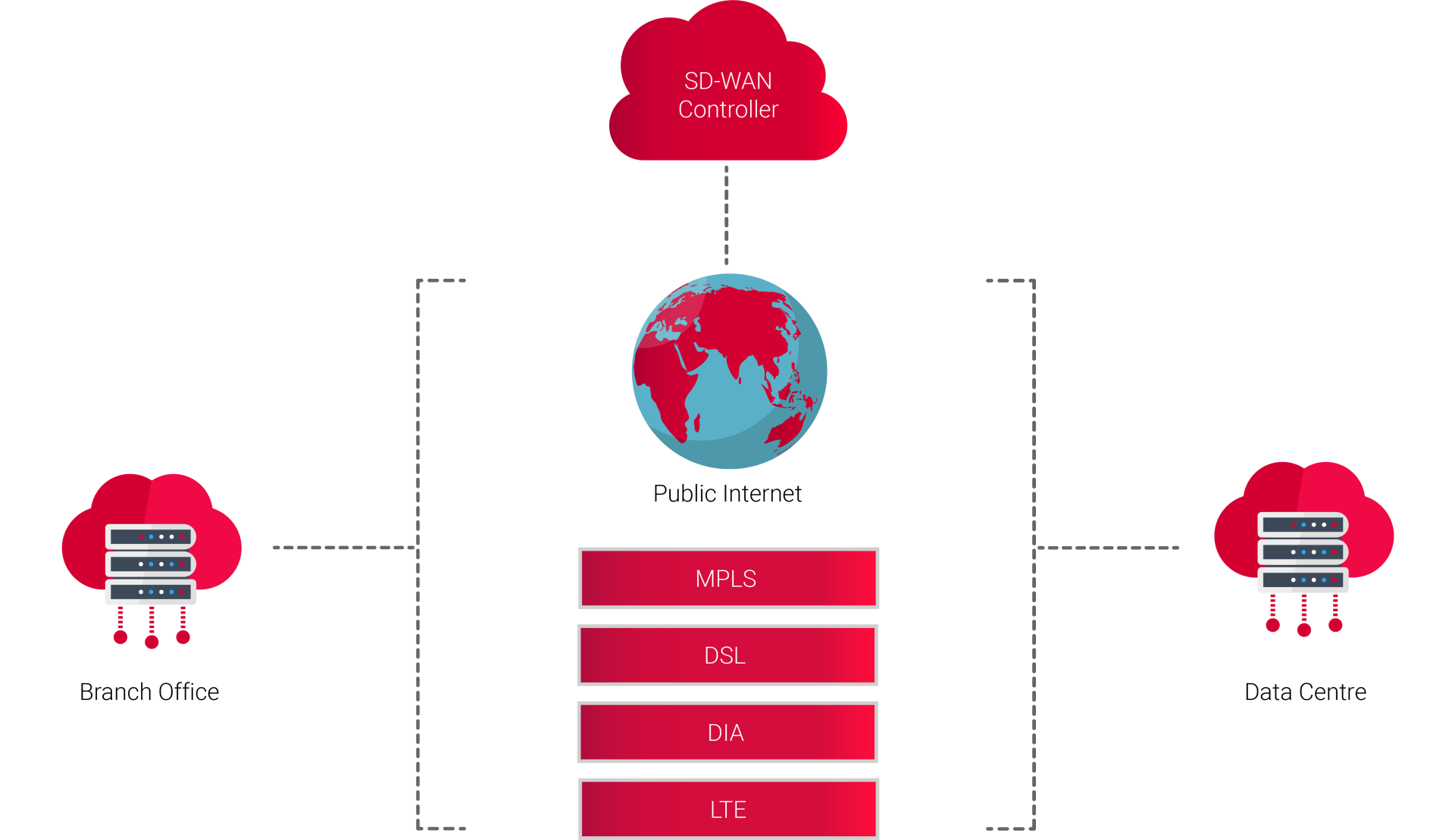

Infographic showing SD-WAN structure

What are the benefits of SD-WAN?


SD-WAN uses a centralised control function to direct traffic across the WAN with intelligent programming. This delivers much greater application performance and efficiency, significantly improving Quality of Experience (QoE) for the user. Other benefits include productivity, agility and reduced costs. 


Traditional WAN architecture was never designed to support cloud applications and Software-as-a-Service (SaaS). Typically, in scenarios where a router-centric architecture is used with cloud applications, all the data is backhauled to a hub or branch data centre where centralised firewalls provide protection. This can result in poor QoE due to high latency and restricted bandwidth, particularly where expensive MPLS is used as the backhaul.


The SD-WAN model is designed to fully support a hybrid environment, with applications hosted in on-premise data centres, public or private clouds and delivered via SaaS services such as Office 365 and SalesForce, with direct and secure routing of user traffic from their location.


Has SD-WAN moved past the hype phase?


SD-WAN has finally moved through the hype phase. In one recent survey, 50% had either deployed or are in the process of piloting and rolling out SD-WAN.


As recently as three years ago, SD-WAN was being touted as the solution to drastically reduce the cost of the underlay network. The concept was to harness the error correction and load sharing capabilities of the overlay to drive out enterprise grade performance over multiple cheap broadband connections.


It is striking how much understanding and thinking has moved on. 


The anticipated move by enterprises away from expensive single vendor MPLS networks and traditional managed router networks is certainly happening. However, the driving factors are often more about keeping up with demand than cost savings. 


The reliance on cloud-based services in all areas of business has driven network traffic patterns from traditional hub (data centres) and spoke (users and sites) to user direct to the cloud. 


Users need high quality connectivity across the internet to digital applications and public cloud services. And they need ever more bandwidth. The pandemic has also accelerated SD-WAN adoption across most sectors. Despite a high baseline set in 2020, figures show that SD-WAN continued to grow at a stellar rate in 2021. 


The move to remote working and the continuation of hybrid working models has created a sustained demand for deployments that provide a fast and stable network for remote collaboration among teams. Vendors are constantly updating their packages; finding new ways to meet the challenges set by IT departments. 

Complex glowing screen of numbers and flowcharts

What do I need to know about my network underlay?


It’s also become clear that underlay quality is still a factor to be considered. It is simply not enough to say: ‘it’s the internet, what do you expect?’ Internet connectivity must perform consistently to a level that meets business needs.


It’s not enough to solely rely on clever programming within the SD-WAN overlay to overcome bad internet connections. This does help, particularly when you hit temporary patches of poor performance, but nevertheless careful consideration is required to select the internet providers that can deliver the performance you need. With huge growth in streaming, and technology that requires real-time output, networks must also deliver on latency. 


Understanding where internet providers peer to other providers to route your user/site traffic to mission critical internet destinations is vital knowledge, particularly internationally. It’s common to find your traffic is actually routing through multiple countries simply because you chose an ISP that did not have peering locally.


What is SASE and does it replace SD-WAN?


Secure Access Service Edge (SASE) is a security model that was initially proposed in a report by Gartner in August 2019. 


Essentially, SASE combines SD-WAN and security services such as CASB (Cloud Access Security Broker), FWaaS (Firewall-as-a-Service) and Zero Trust, delivering them together as a single cloud service. 


Security policies enforced on user sessions are tailored to set requirements based on four factors:


  • The identity of the connection
  • Context – the health and behaviour of the device and sensitivity of the resource being accessed
  • Security and compliance policies
  • An ongoing assessment of risk in each session


The ‘edge’ part of SASE is usually delivered through PoPs or vendor data centres close to the endpoints —the data centres, users, and devices. In some cases, SASE vendors own the PoPs, while sometimes they use a third-party supplier. The philosophy of SASE is to bring security closer to the user, allowing for authentication and then direct access to resources to reduce latency. 


In short, no SASE does not replace SD-WAN. It is more like the peanut butter to SD-WAN's jam.


It is a security extension that will offer many other advantages and help realise the future benefits of 5G and Edge computing. SASE is an evolution of SD-WAN but it does not fundamentally replace or change the infrastructure. It is, at this stage, more a philosophy and a model to improve security protocols in an SD-WAN overlay.
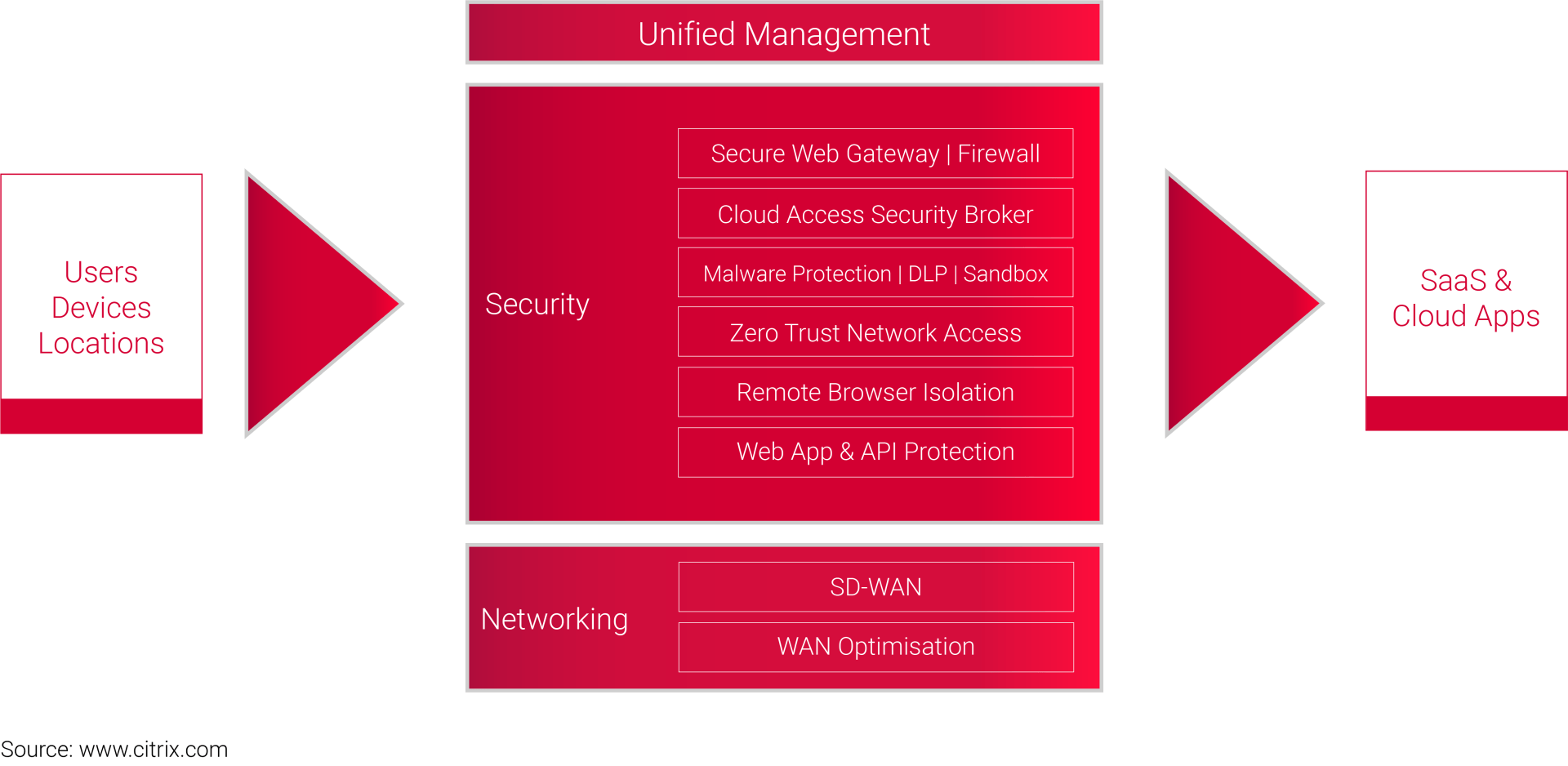
Infographic showing SD-WAN overlay

What are the benefits to SASE?


Gartner predicts that 40% of enterprises will have SASE adoption plans by 2024. 


Because it is a single service, SASE reduces complexity and cost. Enterprises deal with fewer vendors, and the amount of hardware required in branch locations declines.


IT departments can set policies via cloud-based management platforms, and the protocols are enforced at distributed PoPs close to end-users.


Users have the same access experience regardless of what resources they need and where they are located. SASE simplifies the authentication process by applying appropriate security policies depending on the nature of the resources requested.


SASE also supports zero-trust networking, which bases access on user, device and application, not location and IP address.


Are there disadvantages to SASE?


Unfortunately, getting your underlay right is not as straightforward as we might hope. SASE can also cause performance issues.


You might have great connectivity from an office in Rio de Janeiro to a public cloud service in Sao Paulo over the internet, but if you have to send your traffic to a SASE provider in Miami first, you are unlikely to get the performance you need. 


Another disadvantage is a lack of standard or official criteria for SASE. This means some vendors may offer services that do not meet your requirements or the expectations of the model.


We recommend that enterprises take several key things into account:


  • Analyse uptime and availability SLAs, along with the breadth of PoPs for connectivity
  • Assess network and network security capabilities. SASE platforms do not excel at all network functions and services collectively, so evaluate their strengths and weaknesses. For example, some may excel at SD-WAN and traffic optimization,  while others are more focused on CASB or VPN replacement.


There are other issues that are not addressed in the Gartner report. This creates grey areas that will need further research and analysis:


  • Scalability
  • Latency
  • Meeting other requirements: redundancy, reliability, MTTR, customer service
  • New metrics for measuring the effectiveness of new parameters in a new environment
  • Lack of any official description/standard


How do I choose the right SD-WAN overlay?


SD-WAN overlays are being managed in a variety of ways from internally managed through to buying in a fully managed service. However, as discussed at the WAN summit, ‘vanilla’ managed SD-WAN services are likely to fall short. 


In our experience, enterprises were often disenchanted with their traditional managed router service from suppliers, as the race to the bottom on costs often led to suppliers offering only simple ‘up/down’ monitoring of links and fault handing and little more. At the same time enterprise expected a lot more from a ‘managed service’, such as proactive performance monitoring and intervention. 


SD-WAN takes both expectations and requirements to a whole new level, because the network is interacting with applications, not just acting as a pipe. While early SD-WAN adopters tended to manage their networks in-house already, and carried on doing so with SD-WAN, others have moved towards a co-managed model where there is a division of responsibility between a supplier with the technical know-how and operational capability to handle faults, and the customer with deeper understanding of their whole ecosystem. 


As Network-as-a-Service matures, we will see operators and service integrators that integrate and operate with enterprise clients closely enough to move the boundaries again; so that enterprise takes less of the load. 


Research suggests that if enterprises consider existing skillsets, vendors, products and timing of hardware refresh cycles as migration factors, they will reduce their SASE adoption time by half.


AI operations is likely to be the next paradigm. Automation and AI will have a vital part to play in the fast triage of issues and self-heal in the network and is likely to be an important component in bridging the gap between customer expectations of a managed SD-WAN service and affordability. 


Despite the investment required to implement SD-WAN and SASE, by both suppliers and enterprise clients, the eventual benefits of improved performance and reduced costs inevitably leads to a convergence between network and security. Remote working and the continuation of hybrid working models has also given SD-WAN a boost 


It will be interesting to find out what the cloud giants, AWS, Microsoft and Google, offer as their own SASE recipe to fight off competition. This is an evolving market, and there will be a long list of hybrid models and integrations before the playing field levels out.


The growth of IoT and Edge computing will only increase the need for SaaS applications and cloud storage. To move away from on-premises architecture and security, the SASE model will need greater adoption; this way, end users and devices can gain secure access to all the resources they require with protection from security located close to them. Once users are authenticated, they have direct access to resources, which improves latency.


This convergence will mean enterprises need to consider how they adjust their organisational boundaries to reflect this new reality.


Will SD-WAN help prepare for 5G?


Banner showing 5G letters glowing neon

5G will emerge as another important underlay access service to sit under the SD-WAN overlay. Those that have adopted SD-WAN already are likely to find it easier to adopt this access technology that trying to plug 5G into a traditional router network, providing an important and cost effective network access method of particular use cases.


SASE and 5G also offer complimentary benefits —SASE being the best model to create security authentication at the network edge, rather than having direct traffic back to the core. SASE can offer automatic verification and authentication gateways between the user and the enterprise where they are located. It will allow endpoints to access private 5G network slices, authenticating users not only as they cross the enterprise boundary, but also according to rules and hierarchy as they access each specific application.


Early adoption of the SASE model and integrated services, paves the way for a secure 5G network and complete cloud security strategy in the future. With a security and network management platform combined with 5G flexibility and speed (particularly over the last-mile), companies will be prepared for the inevitable confluence of SD-WAN, SASE and 5G.


These future technologies make it an exciting time for SD-WAN. We are past the hype and now well on our way into full adoption. With the advent of SASE, Edge compute and 5G, there will be huge leaps forward for performance, in both bandwidth and latency. AI will also create decision-making at nodes, creating faster and more intelligent network routing.  


Find out about our SD-WAN, cloud & network transformation services


Building on decades of experience delivering network change, we have the skillset to deliver the complex network transformation programs necessary to prepare for agile change in rapid markets. 


We can transition your network from data centres to the cloud and hosting space such as Azure and AWS. As digital tools and data analytics become increasingly mission-critical, agile networks are required to underpin rapid movement in IT and business strategies. We help you make the right choices among the hype and the myriad options on offer.


Find out more about our SD-WAN and network architecture consultancy services


About Us


Cambridge Management Consulting (Cambridge MC) is an international consulting firm that helps companies of all sizes have a better impact on the world. Founded in Cambridge, UK, initially to help the start-up community, Cambridge MC has grown to over 200 consultants working on projects in more than 25 countries. Our capabilities focus on supporting the private and public sector with their people, process and digital technology challenges.


What makes Cambridge Management Consulting unique is that it doesn’t employ consultants – only senior executives with real industry or government experience and the skills to advise their clients from a place of true credibility. Our team strives to have a highly positive impact on all the organisations they serve. We are confident there is no business or enterprise that we cannot help transform for the better.


Cambridge Management Consulting has offices or legal entities in Cambridge, London, New York, Paris, Dubai, Singapore and Helsinki, with further expansion planned in future. 


Find out more about our digital transformation services and full list of capabilities

Subscribe to our Newsletter

Blog Subscribe

SHARE CONTENT

by Pete Nisbet 7 November 2024
edenseven Designs Energy Supply Strategy for H2 Green By conducting an energy sourcing review and engaging with suppliers H2 Green are a large-scale hydrogen storage business with a focus onsite close to towns and cities across the UK. H2 Green’s ambition is to build hydrogen hubs that deliver large amounts of hydrogen, providing security of supply for multiple users across whole regions. H2 Green engaged edenseven, one of the Cambridge Management Consulting group of companies, to build an electricity supply strategy to meet their growth aspirations and environmental requirements. Project Overview To provide a clear outline of the contracting structures within the UK electricity market which would support the green credentials of the business. Structures needed to range from REGO back supply contracts to more complex long-term renewables agreements. All contracting requirements needed to meet the ‘Renewables Transport Fuel Obligations’ and ‘Low Carbon Hydrogen Standard’. Investigate the commercial opportunities short short-term flexibility of assets and liaise with the supply commodity on product development. Support in consultations to government departments relating to the proposed price support mechanism. Skills & Knowledge An energy expert with a detailed knowledge of the UK energy market, with a specific understanding of the evolving policy landscape and how green hydrogen fits into the government’s forward plans. An insight into global commodity markets and the various contracting structures currently in place across the supply community. A clear understanding of how assets can be utilised in the short-term trading markets and the value of ‘optionality’. An individual who holds key relationships across the supply community to enable product development and the ability to influence existing standardised offerings. Outcome & Results Market Analysis : The delivery of a clear and concise view of all the contracting structures currently being provided with the UK electricity market; this included both physical and financial products. Engagement with Government Bodies : A well-considered submission to the relevant government bodies in response to a published consultation. This outlined the appropriate pricing and support structure needed to accelerate the Green Hydrogen Industry. Supplier and Investor Relationships : The creation of a strong link to key suppliers and investors within the energy market. Promoting the development of Green Hydrogen and the benefits it can bring to global decarbonisation.
A satellite over planet Earth with the sun glowing in the top left
by Steve Tunnicliffe 15 October 2024
The Satellite Industry is in a Period of Momentous Transformation The satellite industry is going through a period of momentous transformation with the emergence of new entrants and new technologies in every segment of the value chain. For decades satellite communications have been dominated by a handful of GEO satellite manufacturers, satellite operators and ground segment manufacturers with almost a cottage-industry-like network of service providers and value-added manufacturers (BUCs, LNBs and antennas). This has been a linear and predictable business model with entirely proprietary technologies. We now see the emergence of new Non-Geostationary Orbit (NGSO), or multi orbit players in LEO, MEO and HEO building completely vertically integrated systems. This shift has significantly driven down capacity pricing: the price of satellite bandwidth for data services has dropped 77% over five years according to analysts Novaspace, formerly known as Euroconsult. Starlink, as the first to market, is making waves by disrupting market sectors historically monopolised by the established GEO players such as maritime, aero and enterprise connectivity. Two years ago, the industry would have dismissed Starlink's impact on maritime or aero connectivity segments. The sentiment was that Starlink has ‘no CIR’ (Committed Information Rate) and therefore would not be considered ‘reliable’ for mobile or critical communications. This notion has since been overturned and the naysayers have paid a price with a significant impact to revenues in maritime—the cruise industry in particular—with Starlink now making inroads into aviation and previously inviolable segments like defence. Starlink has also revolutionised satellite manufacturing, leveraging new technologies such as 3D printing to mass-produce satellites at a phenomenal rate, reducing costs to between $250,000 and $500,000 per satellite. The race is on, with Elon Musk’s Starlink trying to acquire as many subscribers as possible before the challengers like Amazon's Kuiper and Telesat's Lightspeed emerge. Forrester's Digital has predicted that SpaceX’s Starlink broadband-by-satellite system is likely to end 2025 with around 8 million customers (it ended 2024 with approximately 5 million), a remarkable growth rate when you consider that each of the leading GEO satellite operators typically have around 25,000 enterprise VSAT terminals activated. We also see the emergence of Small Sat and MicroGEO manufacturers disrupting traditional commercial models with innovations like satellite-as-a-service. This technology provides additional or targeted capacity for defence and government in hotspot areas. Twenty-five years ago, building and launching a satellite would have cost at least two billion USD. Now we see them being built and launched at a fraction of that cost (circa $60 million), reducing the price per gigabit equal to or below fibre. Starlink has also been fundamental to reducing launch costs. In 1981, launch costs were $147k per kilogram of payload. Starlink’s current generation of rockets have brought this down to $2300 and with the introduction of their new Starship rocket, Elon Musk is talking about a price as low as $100 per kilogram. This scale of reduction in launch costs is driving the democratisation of space by allowing new use cases for space to emerge. The satellite industry is also seeing unprecedented consolidation, coopetition and collaboration, creating a range of new offers to consumers, enterprise and governments. Significant transactions include: In April 2024, SES announced its intention to acquire rival Intelsat. If and when this completes, it will be a significant transaction In May 2023, Viasat completed its acquisition of Inmarsat In October 2023, Eutelsat and OneWeb completed their merger transaction In March 2024, prior to the SES announcement, Intelsat extended its partnership with competitor Eutelsat-OneWeb for LEO services.
by Duncan Clubb 6 September 2024
Artificial Intelligence (AI) is the hottest topic in technology for many reasons, good and bad, but it’s happening and it’s here to stay, so how do we build the infrastructure necessary to support it? To start with, we should recognise that there are many forms of AI. The one that has created the most buzz is generative AI, as seen in ChatGPT, Meta's LLaMA, Claude, Google’s Gemini, and others. Generative AI relies on LLMs (Large Language Models) which have to be trained using vast amounts of data. These LLMs sit in data centres around the world, interconnected by vast fibre networks. The data centre industry has not stopped talking about AI for at least 18 months, as it gears up for an ‘explosion’ in demand for new capacity. Some of the most respected voices in technology have predicted immense amounts of growth in data centre requirements, with predictions of triple the current capacity within 10 years being at the conservative end. That’s three times the current global data centre market, which has taken 30 years or more to get to where it is today. And, when we say growth, we’re talking about power. AI systems will require three times more electricity than data centres currently consume. Depending on who you ask, that’s about 2-4% of today’s global electricity production. And we’re talking about tripling that, or more. Data Centres So, what is ‘AI-ready infrastructure’ and how are we going to build it? The two key elements are data centres (to house the AI systems) and networks (to connect them with the rest of the world). LLM training typically uses servers with GPUs (the chip of choice for AI) and, for various technical reasons, these work best when in close physical proximity to each other – in other words, GPUs work best in large numbers in large data centres. Not just that, but the new generations of GPUs work best in dense data centres, meaning that each rack or cabinet of AI kit needs a lot of power. Most data centres are designed to accommodate older kit that is not so power hungry. The average consumption globally is about 8kW per rack, although many still operate at about 2kW per rack. The latest nVidia (the leading GPU manufacturer) array needs a colossal 120kW per rack. The infrastructure inside a data centre designed for these beasts is complex: the cooling systems (GPUs run very hot) and electrical distribution systems are much harder to design and set up, and are also expensive. So, data centres for AI training systems are mostly going to be new, as adapting older facilities is a non-starter. So, where do you put them? Finding land next to the vast amounts of electricity required is increasingly difficult in many European countries, especially in the UK. Most of the utility grids in Europe are severely lacking in spare capacity, and building new grid connections and electricity generation is a slow and expensive process. The answer might be to locate these new AI data centres near new renewable energy generation sites, but those are few and far between, so land with access to power now carries a hefty premium. Small nuclear reactors could also be an answer but might take a few years to materialise – we know how to build them (witness the nuclear submarine industry) but getting planning permission to put them on land is another matter. All in all, the data centre industry seems to be at least a few years away from being able to provide the massive upgrade in capacity that is expected. Even solving the land/power problem leaves the issue of actually building a new scale of data centre, 10 or 20 times bigger than what most would consider to be a gigantic site today. It can be done, we can solve the engineering challenges, but these are huge construction projects. Networks What about the networks? Actually, although very little real research has been done on the impact of large-scale AI rollouts on existing networks, we might be in a better position. The fibre networks in the UK and many European countries have benefited from significant investment over the last few years, so coverage is a lot better than it used to be. That does not mean that fast and large fibre routes, which will be a necessity for most AI systems, are all there, but it will be easier to build out new capacity than it will be to find power. Still, what we really need is some serious research into the amount of data that will need to be moved about and how that maps with existing network infrastructure. All in all, we have more questions than answers. Some people in the infrastructure industry are sceptical that things will ever get to the scale that some are predicting, but most of us do expect it to happen – it’s just a matter of time, and the race has already begun. Cambridge Management Consulting Duncan Clubb is a Senior Partner at Cambridge Management Consulting, specialising in data centre and edge compute strategy. Duncan has extensive experience as an IT consultant and practitioner and has worked with many leading organisations in the financial, oil and gas, retail, and healthcare sectors. He is widely regarded as a leading expert and is a regular speaker at industry events. If you or your organisation require support preparing your Digital Infrastructure for the emerging AI-industry, you can read about our array of Data Centre services, and get in touch with Duncan Clubb, through our designated Telecoms, Media, and Technology service page.
by Rachi Weerasinghe 19 August 2024
The EU AI Act In March of this year, the European Union published their Artificial Intelligence Act, establishing a common regulatory and legal framework for AI across the EU. Two significant features of this act include the definition and prohibition of AI practices which pose an ‘unacceptable risk’; as well as the requirement for developers and ‘implementers’ to register high-risk AI models and maintain technical documentation of the model and training results. The AI Act is the first comprehensive AI legal framework in the world. It will help to shape the digital future of the EU and guarantee the safety and fundamental rights of people and businesses. Who does it Apply to? The Act applies to any marketing or use of AI within the EU, regardless of whether those providers or developers are established there or in another country. While this effectively makes the act global in scope, this will depend heavily on how effectively authorities can prosecute outside of the EU. A Risk-Based Approach The EU’s AI Act adopts a risk-based approach which categorises AI systems into different risk levels (Unacceptable, High, Limited, and Minimal Risk), and imposes corresponding regulatory requirements.
Carer pushing a service user in a wheelchair through a rural setting
by David Lewis 30 July 2024
Unpaid carers provide essential support yet face poverty and isolation. Learn about Carers Network’s work in London, trustee Nadia’s story, and how Cambridge MC supports this vital charity helping carers gain recognition, resources, and dignity.
by Pete Nisbet 23 July 2024
edenseven Helps ISS to Decarbonise their Operations By conducting a review of their market and target audience to align their organisation with their sustainability goals. ISS is a leading workplace experience and facility management (FM) company which provides placemaking solutions that contribute to better business performance and make working life easier, more productive, and more enjoyable. With a significant presence in the build environment, ISS has a clear focus on delivering sustainable services to their customer base, helping them to achieve their net zero ambitions. edenseven , one of the Cambridge Management Consulting group of companies, were commissioned to review ISS’ current sustainability market offering, and, through an engagement programme, make sure that it was aligned to the requirements of their customers’ long-term sustainability ambitions. Project Overview To review the current market relating to sustainability services within the sector and outline the different types of structures and products being offered. Assess the current product and service positioning of ISS and review how they are being presented and articulated to the internal delivery teams and customer base. Create a clear and concise value proposition which outlines ISS’ breadth of services, and which can be communicated to customers by a broad cross section of the ISS team. Through a customer engagement programme, test the value proposition with a set of key accounts and record areas where refinement would be needed to align it to their requirements. Present findings to the ISS UK board and provide clear feedback and next steps. Skills & Knowledge Data Analysis: A broad knowledge of both the FM and sustainability sectors, and an ability to articulate findings from market research and stakeholder/customer interactions in an effective manner. Report Generation: Create documentation and reports which deliver complex requests and findings in a concise and clear manner to senior stakeholders and customers. Stakeholder and Customer Engagement: Build a continuous feedback loop to senior stakeholders within ISS and across key customer accounts. edenseven captured and reviewed customer needs and service requirements to produce effective and timely decision making. Outcome & Results Market Awareness: A clear understanding of market trends and contractive characteristics relating to sustainability services in the FM sector. Organisational Clarity: An outline of current services and how they are delivered through the sales process. Value Proposition: A clear and relatable value proposition which captures all services in a format which can be delivered by a broad cross-section of the ISS workforce. Forward Planning: A board-level presentation and report outlining key findings and next steps to deliver existing and new services which are focussed on meeting key customer requirements.
A stately council building in England with a neon tint
by Craig Cheney 11 July 2024
It is no secret that Local Authorities throughout the UK have found themselves in a period of economic turmoil; struggling with a lack of funding and how to distribute it - or, often, deciding to withhold it. Since Northamptonshire County Council issued section 114 (the local council equivalent to declaring bankruptcy ) in 2018 – the first to be issued in nearly two decades – an average of two regional authorities have issued their own section 114 notice each year since. Three local authorities issued section 114 notices last year alone, including the largest in Europe, Birmingham City Council . Referring to this escalation, Jonathon Carr-West , Chief Executive of the Local Government Information Unit (LGIU), said: “This year’s State of Local Government Finance report reveals the desperate, ruinous financial situation councils find themselves in. “With over half of councils warning us they are at risk of bankruptcy within the next Parliament, it is no longer possible to blame individual governance issues.” What are the Causes? Funding The key driver is lack of central government funding. Council’s cannot borrow to run services and so rely on income and reserves in order to pay for day-to-day services. Central government funding cuts have seen councils lose nearly 50% of their government funding since 2010. This has been partially offset by council tax rises, but still means local authorities have lost nearly 20% of their funding in real terms since 2010, with those representing the most deprived areas reaching nearly 30% . Adult Social Care During this time spending on Adult Social Care (support provided to adults, including both older people and people of working age, with physical disabilities, learning disabilities, or physical or mental illnesses) has increased dramatically. An ageing population is driving increased demand while the cost of care home placements has increased by 35% . Child Social Care Spending on Children’s Social Care has increased significantly, particularly since COVID-19 with the number of children in secure units and children’s homes and the number with Education, Health and Care plans both increasing by over 30% between early 2020 and early 2023. The cost per placement has increased by almost 20% over that time period. Both Adult and Children Social Care costs have increased far above inflation over this time, coming on the back of a huge reduction in core spending power. Temporary Accommodation Finally, the cost of providing Temporary Accommodation has risen sharply over the past few years. An LGA report revealed that local councils were spending at least £1.74bn to provide temporary accommodation, with a severe shortage in social housing resulting in a portion of this going to private alternatives including hotels and B&Bs. These figures represented the current situation as of March 2023, when 104,000 households were living in temporary accommodation, an 89% increase over the past decade. Only 8 months later at the close of 2023, this had risen to 112,660 households in temporary accommodation—with the funding required to balance this increasing exponentially, pushed higher by a cost of living crisis and inflation. What are the Consequences? The most immediate and simple way look at this is that while bills have increased significantly for the average council tax-payer, services have been significantly scaled back. Cuts to park budgets, economic development, culture services, and the reduction in spending on Public Health, education, housing services, children's centres and everything else that local government is responsible for have left many cities, towns and villages looking neglected and often struggling with anti-social behaviour and boarded-up high streets. Behind the scenes, many of the essential back office functions have been stripped to the bone in order to protect frontline services: call centres are understaffed; planning services unable to cope with demand; not enough project managers, accountants or procurement staff to deliver on council ambitions or the transformation projects to reduce costs on essential services; not enough HR staff to support those on the frontline and not enough administrative staff to support the social workers, education & skills teams, the transport teams and the rest of local government trying to prop up essential local services. Local government is the government that touches all of us every day, even if we don’t always realise this. The new Labour government will need to focus on this issue for the benefit of every individual, community and region. How Cambridge MC can Help Local Councils If you are currently working in local government and are feeling the impacts of the economic crisis as outlined here, the Public Sector and Education team at Cambridge Management Consulting can work with you and your council to alleviate some of this pressure in both the short- and long-term. Our skilled procurement and contract management team can help you reduce costs; our programme and project management function offers fractional or interim leadership and full lifecycle support for challenging transformation projects; and our process and change management teams can help with process re-design and automation. We can also support your organisation with a range of cyber security issues you may be facing; potential or live, and our Digital and Innovation team can help solve your problems in new ways, using the latest technology to improve outcomes for your residents as well as reducing costs. Led by Craig Cheney, previous Deputy Mayor of Bristol City Council, our service combines an in-depth knowledge and awareness of the Public Sector, its operations, and challenges, with a business approach to help you identify and evaluate obstacles and opportunities for movement within your budget. Learn more about Craig and our Public Sector & Education service, and get in touch with our professionals at https://www.cambridgemc.com/public-sector-and-education , or use the form below.
Picture of African students in a classroom
by Elia Tsouros 8 July 2024
Since the 1960s, significant strides have been made to provide and increase access to quality education for children and young people in Africa. The educational environment has not remained stagnant, and the continent is all the better for it. However, this unfortunately does not paint the whole picture, and there is a poignant reality that lies just behind the statistics. In short, merely having access does not guarantee an improvement to the actual quality of this education; as rightly noted by Faturoti, “Although all African countries have legal provisions recognising the right to education, there is no corresponding law on access to the Internet.” Yet, Africa’s unique combination of challenges has left more than just gaps in knowledge: 2019 saw 17% of African children not attending primary school, and 53% of teenagers not attending upper secondary school . The harsh blow dealt by COVID-19 has only deepened the educational crisis globally. Yet, despite these challenges, there is a resilient spirit that refuses to be extinguished. The pandemic has underscored a powerful lesson: technology, when harnessed with the right connectivity, can be a transformative force, offering a ray of hope in the quest to overcome educational barriers. In this article, we will explore how we can take the barriers blocking this intelligent future and support the growth of a digitally connected classroom, ensuring that no one is left behind in the continent’s transformation. The ways in which learning is conducted has never been more important: to learn is to grow and the progress which begins in the classroom will soon be reflected across the continent. From Challenges to Change: Barriers to a Connected Classroom In the expansive landscape of Africa, a sobering reality appears –only 39.7% of the population is woven into the digital fabric, standing in stark contrast to the global average of 66.3% as reported by the International Telecommunication Union (ITU). This digital divide is not just a technological hurdle but a societal challenge, one that deepens when faced with the simultaneous necessity to invest not only in advanced technology but also in financial literacy. As we grapple with the intricacies of digital inclusion, the first bridge we must construct is one that spans connectivity disparities: the use of online educational platforms can ensure that students not only have access to educational material relevant to their studies, but also that this material is the latest available. Electrical reliability stands as a foundational must-have for the successful implementation of digital learning initiatives. Investment in expanding telecommunications infrastructure , such as laying fibre-optic cables and deploying wireless networks, is crucial to bridge the digital divide and ensure widespread connectivity. Furthermore, enhancements in power generation including the use of traditional and renewable energy sources and distribution systems are essential to guarantee uninterrupted access to online educational resources. Uninterrupted power supply ensures that students can access online lectures, assignments, and collaborative activities seamlessly, fostering a conducive learning environment. Put simply, enhanced learning makes for more engaged and enlightened students. Furthermore, technical support is indispensable for ensuring the effective implementation and maintenance of digital learning infrastructure. However, limited access to skilled technical personnel, inadequate training, and insufficient resources present significant challenges. Training and capacity-building programs must be enhanced to equip individuals with the necessary skills to support complex ICT infrastructure effectively. There are many projects already underway which promise to forge this change and training. Investing in training programs, certification courses, and apprenticeship initiatives promise to cultivate a skilled workforce capable of delivering and, importantly, sustaining these changes. Addressing these interconnected challenges requires a holistic approach, encompassing political commitment, infrastructure investment, educational reform, and skills development initiatives. Without sustained political commitment and investment, efforts to expand internet access and improve electricity reliability risk being compromised, perpetuating the digital divide. The strategy was endorsed by the Thirty–Sixth Ordinary Session of the African Union Executive Council held in February 2020 , who recognised this: only through collaborative efforts and sustained investment can Africa bridge the digital divide and unlock the transformative potential of digital learning for all its citizens. Looking Forward and Building Change Yet, by overcoming these challenges, the future is bright and worth investing in. We must recognise what is at the core: education is a basic right to all communities, globally. Results are already beginning to bear fruit: UNESCO’s forum on quality public digital learning reveal how bright the prospects could be. Van Manen et al. (2021) emphasise the remarkable impact of digital learning on advancing SDGs , highlighting how it enables countries to address key challenges such as poverty, inequality, and access to quality education without the need for extensive physical infrastructure investments. By leveraging digital technologies, governments can reach underserved populations, bridge educational divides, and empower individuals with the knowledge and skills needed to uplift themselves and their communities. The continent’s digital uptake has also been staggering and speaks to a unique adaptability and adoptability when faced with change. In a 2020 study conducted by GSMA, it was revealed that over 1.4 billion subscribers on the continent utilise their mobile phones as powerful tools for educational enrichment , underscoring the widespread recognition of digital learning's value in shaping the future of African youth. From accessing online courses and educational apps to engaging in virtual classrooms and interactive learning platforms, mobile devices have become indispensable companions on the journey towards academic achievement. This should not be ignored: beyond mere convenience, this shift represents a democratisation of learning, where access to knowledge is no longer limited by physical proximity or socioeconomic status. Instead, digital learning empowers individuals to take ownership of their educational journey, enabling them to learn anytime, anywhere, and at their own pace. Yet, the role of ICT initiatives in classrooms can go even further, providing a visionary tool for tackling existing education inequalities. Behind stark statistics lie the stories of over 129 million girls’ dreams , which are deferred by the harsh realities of poverty, gender-based violence, and early marriage. Each day, countless young minds are forced to miss out on the transformative power of education: girls miss up to 50 days of schooling each year due to the lack of sanitary wear according to Life Healthcare . ICT-equipped classrooms do not promise to solve these issues but bridge the gap: if remote learning becomes a possibility, so does change. Key stakeholders are also ready, able, and actively engaging with the modern education landscape to make the path to learning easier. We’ve seen initiatives take root here in the UK, with Mobile network operators (MNO’s) offering zero rated connectivity packages for education platforms such as BBC Bitesize . Yet, these changes can be seen across the globe and felt deeply: in Kenya, Nigeria and South Africa, initiatives have revealed whole new possibilities for access to information . With software providers also offering free subscription platforms with available content and data, it is clear that the future is brighter than ever. Amidst these challenges, digital learning platforms emerge as powerful allies, tearing down barriers and extending the hand of opportunity to every corner of the globe. Through the magic of digital tools, students are no longer confined by the limitations of geography or circumstance. Instead, they can connect with specialists and mentors from across the world, unlocking new realms of knowledge and inspiration. Conclusion Connected classrooms provide a bridge to change, change which is exciting and necessary. Access to a learning which is digitally engaged promises to enrich education opportunities and better the outcomes for future students. Yet, beyond mere access, digital literacy becomes a lifeline, empowering individuals to navigate the complexities of the modern world with confidence and resilience. In the midst of a rapidly evolving digital landscape, these skills serve as a passport to a future where no dream is too big and no obstacle too daunting. How We Can Help At Cambridge Management Consulting, we stand out from the crowd, particularly in the dynamic and intricate landscape of Africa. Our commitment goes beyond quick fixes; it's about crafting tangible and enduring impacts that resonate with the unique challenges and opportunities present in this diverse continent. Just as digital education offers a cost-effective avenue for countries to enhance their performance on Sustainable Development Goals (SDGs) without the need for expansive physical infrastructure, our consulting philosophy embraces innovative solutions that recognise and leverage Africa's unique dynamics. At the heart of our approach lies our handpicked team of experts, deeply passionate and intimately connected to the pulse of Africa. With a nuanced understanding of the challenges and opportunities this diverse continent presents, we strive to positively impact businesses in the most authentic and sensitive manner, echoing this article's recognition of the transformative potential of digital education in Africa.
Row of old analogue telephones
by Clive Quantrill 24 June 2024
Authors
More posts